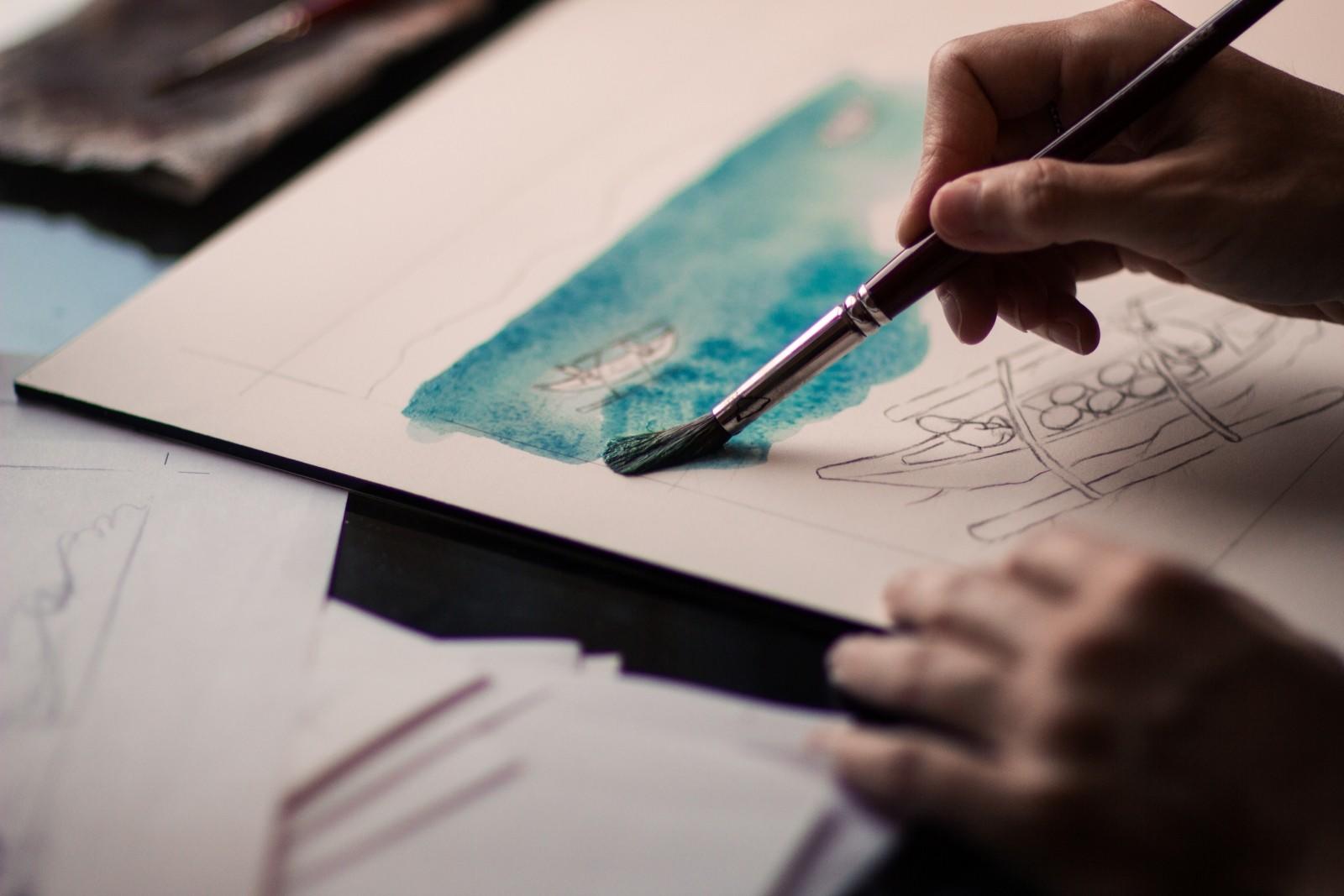

Art can be a beautiful avenue for self-expression, but the advantages of practising it on a regular basis extend far beyond this. People choose to incorporate art into their daily lives for a variety of reasons.
Most commonly your students will be looking for help preparing for the leaving cert exams. If you are studying art as part of the leaving cert program, a substantial proportion of the music subject’s grade is attributed to a practical assessment and the portfolio.
This means that students will have the opportunity to create a number of pieces of art as part of the course. By learning to draw, paint or take photographs you will be making life much easier for yourself, as 50% of the marks for the subject can be picked up from this practical assessment.
This means that you’ll also have a consistent stream of students to teach each year!
Art is not as easy as you would think! In fact, it can prove rather complex when you start out as a beginner. Depending on the student's goals and preferred style of art, practising art can present challenges that to the untrained eye, may prove difficult when attempting to target their weaknesses so that they can continue to progress in their ability.
But getting better at art isn’t just about being able to nail you’re your secondary school or college exams. Like other skills, there is in fact a substantial amount of techniques and mechanics that you will need to practice in order to help craft your own style.
Art has also been found to improve your creativity, retention, and overall cognitive function which will help you to perform better in exams. You can see why it is such a popular choice with secondary level and college students.
Being a private art teacher is a great job and it’s very rewarding for both the tutor and the student. However, it can be difficult to decide on your hourly rate. If you take the time to do your research and see where you fit in the market, you should be able to find the perfect price as an art tutor
Thankfully calculating how much you will need to charge in order to make a living as an art tutor is much easier once you start giving one-to-one private tutorials. You’ll need to add up your expenses and figure out how much you need to charge per hour in order to get by.
In this article, I'll help you to arrive at a competitive hourly rate so that you can make a living teaching art to your students
Want to give private lessons?
Join the Superprof community and share your knowledge with interested and motivated students.
Important considerations when calculating your rate
Finding the best price to offer private drawing lessons is not an exact science.
For one, even though many seek out tutoring companies to lend help with homework or provide supplemental instruction, doing so is still considered private tutoring - even though those one-to-one sessions may occur in a fairly crowded office or even in a group.
Clients who engage in the services of a tutoring centre understandably pay higher fees to cover, among other things, study materials and office overhead. That means that, while hopeful parents may pay up to €50 per session for more advanced and experienced tutors with some primary school teachers being available for as little as €10.
Many enthusiastic art patrons seek art classes as an enrichment activity rather than to succeed in gaining entrance to the art school of their dreams. Given the hefty price tag associated with some of these schools, asking for too much might price you out of the market!
It’s often better to add up your expenses and go from there!
That is why it's necessary to take into account several parameters so you get paid fairly while your students get a learning environment tailored to their artistic aspirations.
- Where will the painting or drawing workshops take place - will you travel to their homes, invite them to your studio or embrace modern teaching strategies and become an online tutor?
- Would you have to take your students' learning style into consideration, as a reading and writing tutor or one who teaches calculus might?
- Is the artistic material supplied (paper, paint, brushes, felt, etc.) for the drawing course?
- And would those materials work for kindergarten students as well as those enrolled in universities?
- For what purpose are these courses or internships of plastic arts given?
So many questions to ask as you become a tutor!
One of the most difficult this to do setting a price for your art lessons of a fairly remunerative and attractive drawing course for both the professional and the enthusiast who delivers it.
Now let us imagine you will host landscape watercolour painting courses for adult beginners, or host a street photography session.
Here, you will have to consider whether you would take your student(s) into the field to actually view the landscape or street in question, along with whether you will provide the watercolours and the canvas - if that is your choice.
You might even furnish the digital cameras...
For these lessons, you would have to consider the cost of everything, from travelling to the price of the canvas - unless you request that your student furnish materials (or camera) him/herself.
By contrast, still life or portrait photography can be executed in a studio, so naturally, you would not need to incorporate travel costs into your fee. Furthermore, you could limit class time to an hour or an hour and a half, meaning you may plan for more sessions on that day.
Offering a Fair Price for a Drawing Course Depending on the Level of the Student
Your rate will depend if you are instructing your students how to paint for their own leisure or in preparation for an entrance examination in a school of art. The hourly rate will be different just like painting workshops, which typically deviate let's say from €10 to €40 per hour.
Indeed, the required technical level will not be the same, just like your personal involvement before and during the sessions. Let’s remember that we can also wish to learn to draw for our own pleasure, not all of us are serious about being the next Monet!
If you want to help beginners that are just starting out on their journey then you might want to consider offering a discounted price for your services. By working alongside beginners you could help them to avoid making common mistakes such as not cleaning their brushes properly.
When it comes to the more advanced students. There are more practical exercises that you can employ within your classes to help them to improve as artists. As an art tutor, you will be able to assess your students, target their areas of weakness and guide them through their learning. You might want to consider charging a premium for these sessions due to the difficulty.
In most cases, teaching art in classes is more practical than individual instruction. As such, setting rates for a small group is easier done than for a lone art student who requests home tutoring or online tutoring on a weekly basis.
If such individualized tutoring sessions are geared more toward a type of academic tutoring, you may set your rates competitively with other tutoring programs that help students achieve academic success!
As you've seen, bundling your lessons is clearly more lucrative for you, all while providing savings for your students. However, bundling isn't always a one size fits all proposition.
For one, teaching children to draw trees and puppies with coloured pencils is less technically intense than talking a university student through the technical aspects of drawing a realistic human face or hand.
Find out what qualifications you need to become a private art instructor...
What you need to remember!
Setting your prices for art tuition is a lot like setting prices for math tutoring, English tutoring, college tutoring, or online tutoring.
- Consider the age of your students and balance it against the level of expertise needed to teach them.
- Consider your level of experience with the material in question: being degreed permits you slightly higher rates than, say, an undergraduate who tutors during summer break.
- Consider the rates set by other art tutors in your area.
In learning how to become a drawing teacher, it's necessary to take into account your level of knowledge, experience, certifications, the offering of the material or not, but also the request of the student-customer and his objectives.
If they just come to learn to draw, it takes less effort than preparing for an entrance examination for a school of applied arts.
To find tricks that will allow you to excel in your courses of drawing, check out this article!
Compare with other Superprof art tutors!
Superprof is the best option out there for teachers that are looking to provide their services to students learning art as a hobby or for their careers as artists. The number of art tutors that list their services on the platform has been growing for some time now, as more and more students take up the subject at secondary school.
Whatever their goals, Superprof helps aspiring tutors find appropriate students to mentor! You even have the option to arrange a trial tutoring session with potential students completely free of charge. Give the students a feel for how you do your own classes and inspire them to continue their lessons with you!
Learn the best ways to find students for your art courses!
Through Superprof a student can select their tutor to best suit their particular needs, allowing them to better target their weaknesses and become a more well-rounded artist.
The hourly rate of tutoring for art lessons with a Superprof tutor in Ireland typically ranges from about €12 right up to €30 an hour, with some tutors offering a reduced rate for a higher quantity of sessions.
Students are able to select the tutor that they do their classes with, and decide according to their own specific needs and style of learning. It offers a lot of flexibility for art students all around the country, and can be a great way to jump up a few grades in the subject or wind down after work! Why not get started today?
Want to give private lessons?
Join the Superprof community and share your knowledge with interested and motivated students.
Summarise with AI:
Did you like this article? Leave a rating!

 Loading...