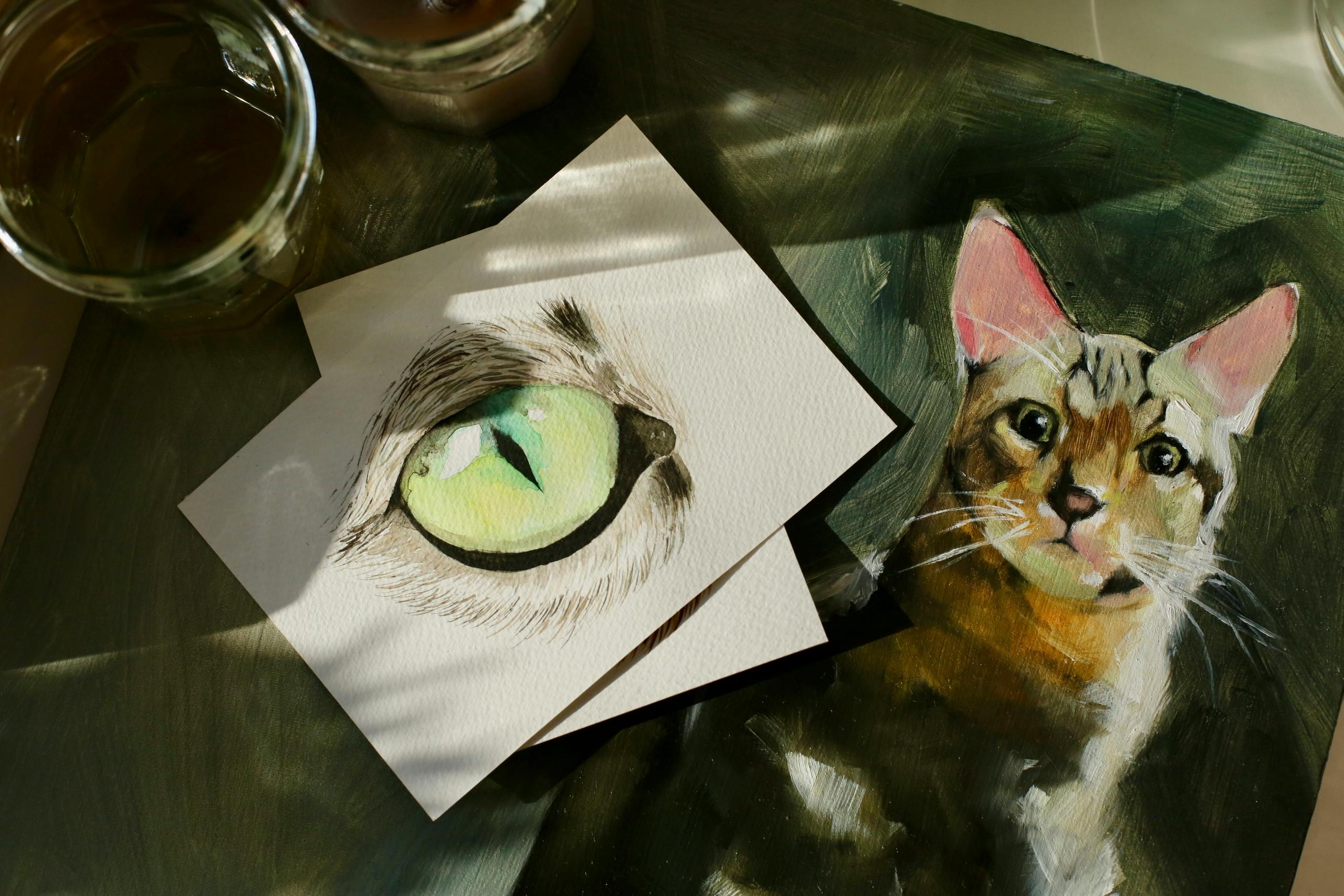

God has made the cat to give man the pleasure of caressing the tiger.
Victor Hugo
Ever looked at your cat and thought, "I wish I could capture that!"? Well, drawing your furry friend is a fantastic way to improve your drawing skills while having a nice picture to frame afterwards. It doesn't matter if you're a total beginner or already comfortable with a pencil – sketching cats is a super rewarding way to spend your time.
There's something truly special about bringing their fluffy fur, those inquisitive eyes, and their elegant poses to life on paper. This guide is your friendly roadmap to drawing awesome cat sketches. We'll start with the basics – simple shapes and getting the proportions right.
Then, we'll dive into the fun stuff: creating realistic fur, understanding how their bodies move, and adding those little details that make your cat unique. You’ll develop your confidence and writing skills to spoon where you won’t shy away from any challenge.





Getting Started With Cat Drawing
So, as with any art project, before you dive in and start getting your ideas down on paper, you first need to make sure that you have everything you might need for the project.
You don’t want to be halfway through sketching your cat and realise that you have to nip off to the local art store because you’re missing what you need to continue.
Thankfully, this isn’t all that demanding of a project, as all you’ll need to get started is some acid-free art paper, an HB graphite pencil, 2B and B pencils for varied shading, and even the most confident of sketchers will nee a kneaded eraser by their side for precise adjustments.
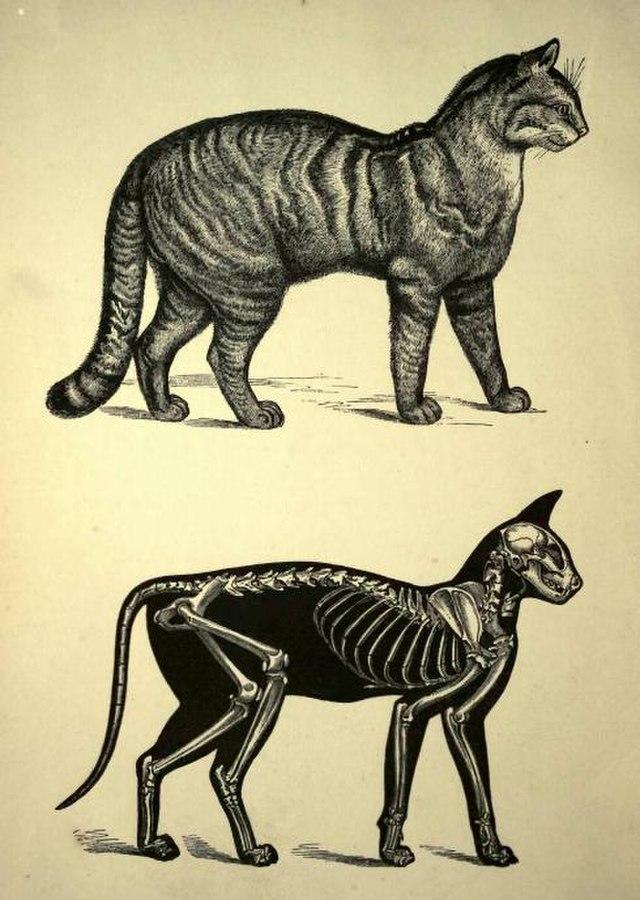
Next up, you’ll need some understanding of feline anatomy in order to capture their unique forms and fluid movements and avoid having their head look like it’s twice the side of their body or vice versa.
Getting your proportions right is half the battle and a skill in its own right that you’ll never forget once you get a bit of practice under your belt. One effective technique that you can add to your artistic toolkit is using simple shapes to help make sure your proportions are on point!
A helpful guideline is to visualise the cat's body in terms of head units: the head is about 1¼ times wider than it is tall, the body is roughly 3½ heads tall, and two heads wide.
With these proportions in mind and a couple of practice attempts behind you, you’ll find your sketches having a little more balance and fewer puzzled faces from anyone you might share your drawings with.
Mastering Cat Features
Some features carry more weight in a sketch, and there’s certainly no avoiding the eyes. This is a feature that you’ll want to spend quite a bit of time on, as it can make or break your sketch of any animal.
While typically almond-shaped, their pupils can change dramatically with mood and light. So, when you’re beginning your drawing, you can start by lightly sketching a circle and then refine the shape to create that almond form.
Pay close attention to the eyelids! You’ll notice that the upper lid tends to cover more of the eye while the lower lid curves gently around it.
Then you’ll just need to remember to leave a small white highlight in the pupil to give the eyes a lifelike sparkle. Keep an eye on the pupils; they can vary in shape, from capsule-like lines to large round circles.
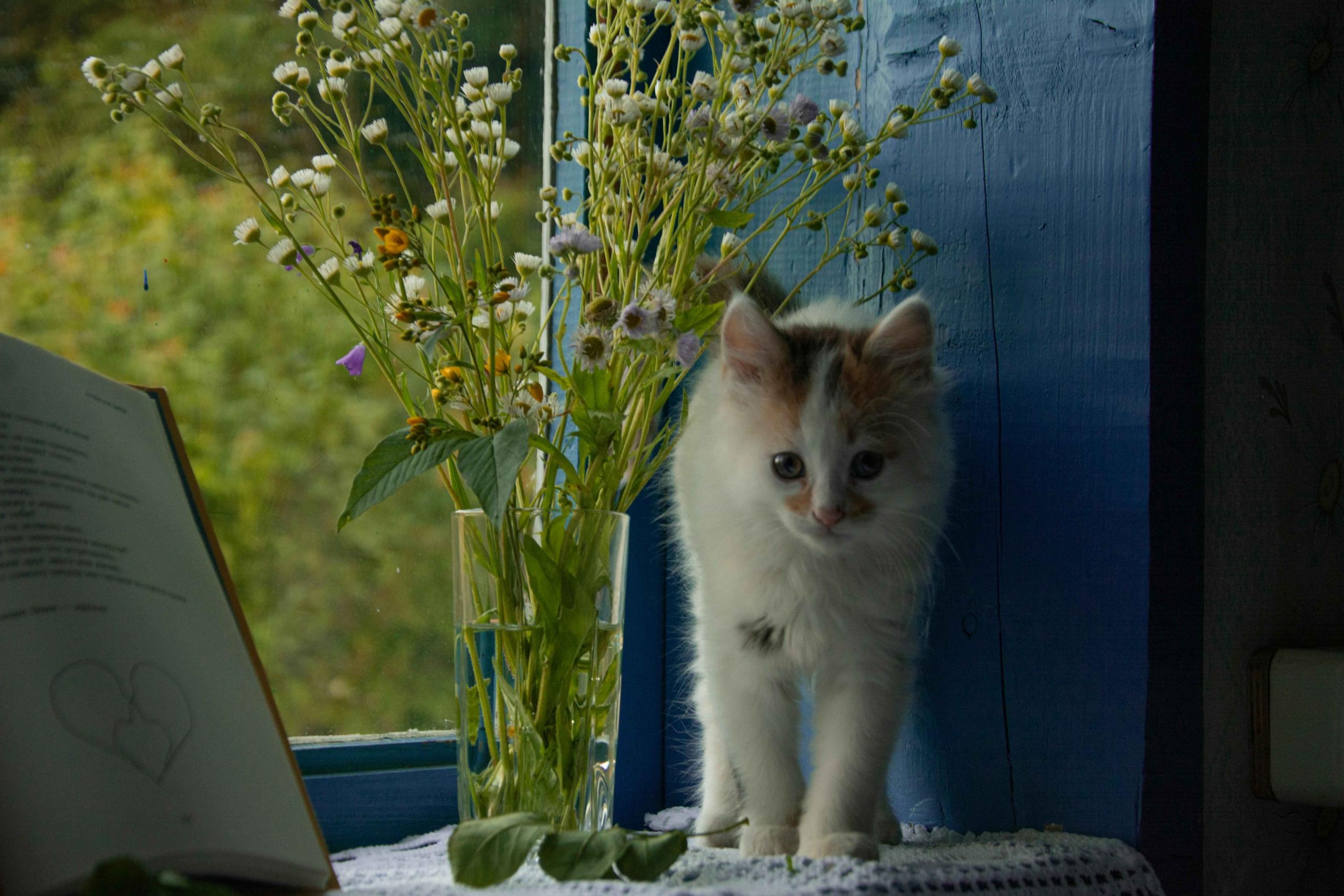
A cat's emotions are vividly expressed through its ears and whiskers.
Ears can be perked up in alertness, flattened in fear or anger, or swivelled independently to focus on sounds.
Whiskers, too, are highly communicative, bristling with excitement or retracting in anxiety.
Accurately capturing these subtle cues in your drawings will bring your feline subjects to life and infuse them with personality.
Whiskers are almost a trademark feature of cats, so much so that if you were to draw on without their whickers, you’d definitely get the sense that something was missing. Dot some pointers along the cheeks and lightly sketch some curved lines outwards from each.
Great sketches have a real sense of life in them, so you’re going to want to capture the unique charm of a cat's face by paying close attention to the nose and mouth.
To go about this, you can define the nose as a delicate V shape, then add the "false nostrils," those adorable furry bumps on either side. Carefully shape the nostrils themselves where they meet the nose's contours.
Techniques for Realistic Cat Fur
When you’re trying to improve your sketching skills, you’re always aiming to achieve that lifelike look in your work.
Sketching the fur of the cat is perhaps the greatest opportunity to achieve this effect in your drawings. In order to make this off, you’ll need to become comfortable with a few skills.
Texturing Methods
You’ll need to train your eyes so that you are paying attention to the direction of fur growth.
A great method that will help you achieve this aesthetic in your sketches is to use short, varied strokes for areas with short fur, like the face and legs.
Then, when it comes to sketching areas with longer fur, such as in the chest and tail, you can try using sweeping strokes that curve slightly and taper to a point, creating the illusion of individual hairs. If you have the hand of this technique, you'll likely have a lot of success when drawing dogs.
Shading and Highlights
One of the first things that somebody sees when they look at your cute cat sketches is the shading and highlighting that makes your animal drawings pop. Whether you're creating a cartoon kitten or a realistic tabby, these techniques can bring your pictures to life.
To add a sense of volume and depth to your cat's fur, you're going to have to work on shading. Begin by laying down shadows with pencils, using smooth strokes that follow the direction of fur growth. This step is easy and fun, even for a child learning to draw.
You can use free stock photos or royalty-free images as references to study how light interacts with different colored fur, from black to orange to purple.
Then, you can gradually build up layers of shading, transitioning from dark to light tones. This will give your drawing a three-dimensional appearance and bring your feline subject to life.
It's like creating a cartoon, but with more realistic details. You can experiment with different coloring techniques, using colored pencils, pens, or even try negative space painting for a unique effect.
Pay close attention to the transitions between light and shadow, as these subtle gradations contribute significantly to the three-dimensional appearance of the fur.
This is especially important when drawing the cat's face, where the interplay of light and shadow can create funny or expressive looks.
Whether you're working on a simple doodle page or a premium illustration, these shading techniques will help your cat drawings look more realistic and engaging.
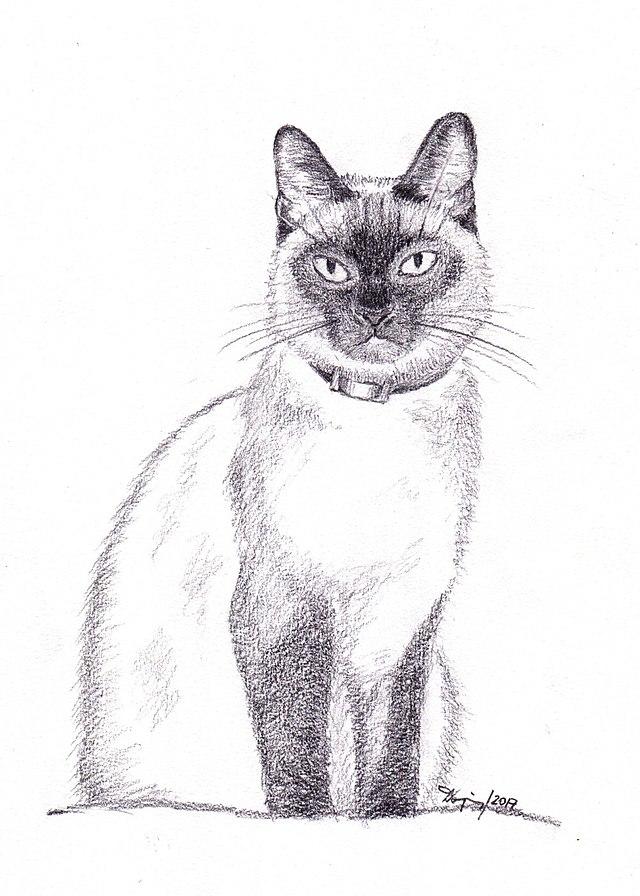
Remember, practice makes perfect! Each year, as you fill your sketchbook with various cat drawings, you'll see improvement in your ability to capture the essence of these fascinating animals. Don't be afraid to try different styles, from realistic to cartoon, and have fun with your artistic journey.
You can find inspiration from various sources, including free images on Amazon or other stock photo websites. Whether you're drawing a playful kitten or an adult cat, these shading techniques will help bring your illustrations to life.
Colour Blending
You don’t need to be an artist to grasp the concept of colour bending, and after a little practice, you’ll start seeing it as a rather effective technique that only adds to your sketches.
You can get started by applying a base layer of your chosen colours and then gradually add layers of varying shades.
This blending will allow you to get a smoother transition between colours and can be done even more effectively with the use of a blending stump, soft brush, or cotton swab to soften edges and create a natural, flowing appearance.
Of course, the is no right or wrong when it comes to art, so make sure to play around with these techniques and see what works best for you. This is also a skill that will help you when drawing animals of any kind!
Posing and Composition
Try out different poses to develop your skills and get used to drawing all sorts of cute cat compositions! Cats are renowned for their flexibility and elegance, so aim to reflect these qualities in your drawings. Whether you're using pencils, pens, or even coloring with purple or orange, each step helps you improve.
Remember that a cat's head can rotate an impressive 180 degrees, offering exciting possibilities for unique illustrations.
Use this to create funny and cartoon-like pictures that children and adults alike will enjoy. You can find free stock photos or royalty-free images online to use as references for your cat drawings.
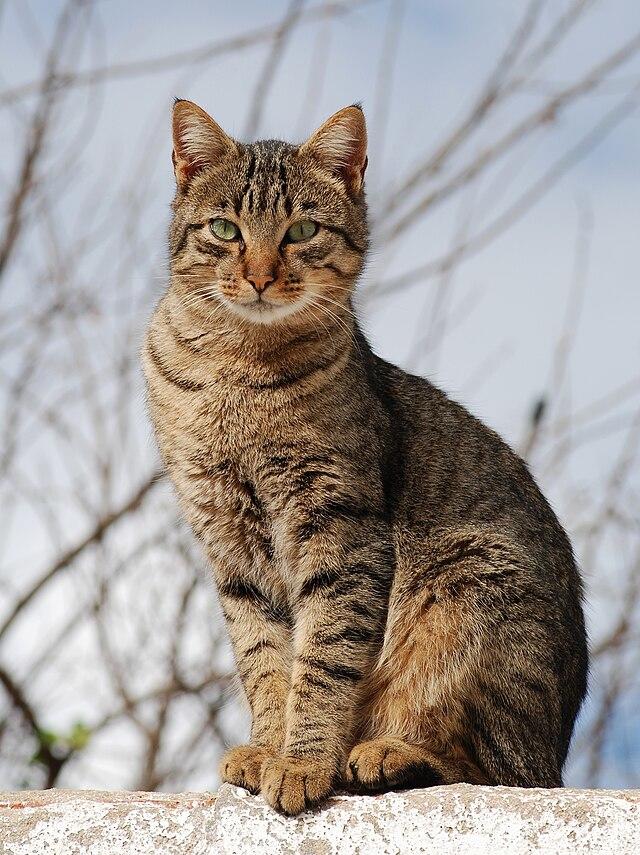
Don't forget the expressive power of the tail!
A high, upright tail often conveys confidence and contentment, while a low or tucked tail might suggest fear or anxiety.
This applies to all cats, from playful kittens to adult tabbies.
By thoughtfully composing your cat drawings with dynamic poses and expressive body language, you can create artwork that is both captivating and full of personality.
Try drawing different types of cats, like a black cat or a tabby, to add variety to your doodles. You can even experiment with outlining your cats in black and then coloring them in, or try a negative space technique for a more artistic approach.
Remember, drawing cats can be easy and fun! Whether you're sketching a simple doodle on a page or creating a premium illustration, each drawing helps you improve. So grab your favorite drawing tools and start filling your sketchbook with cute cat pictures!
This skill is transferable; you can use it with anything, such as drawing horses.
Background Elements
Remember that the background plays a crucial role in creating truly captivating artwork. A thoughtfully chosen setting can add depth and meaning to your drawing, telling a story about your feline subject.
Imagine your cat nestled in a cosy armchair, playfully chasing butterflies in a sun-drenched garden, or perched majestically on a windowsill overlooking a bustling cityscape.
These background elements not only provide context but also enhance the composition and evoke emotions, transforming your drawing into a captivating visual narrative.
Adding a simple background can provide context and narrative to your cat drawing, making it more engaging and complete. By getting good at these skills, you can make cat drawings that really show the spirit of these pets.
Get Started With Your Drawing
Drawing cats is a fun journey of artistic exploration. This guide has given you tools to capture the cute essence of these animals, from understanding their anatomy to creating lifelike fur and expressive faces. Practice drawing different cat breeds, from tabby to black cats, and even cartoon-style kittens.
Explore various poses, styles, and techniques to discover your unique artistic voice. Try using different mediums like colored pencils, pens, or even digital tools to create your cat illustrations. You can find free stock images and royalty-free photos online for reference.
If you're interested in improving your drawing skills, consider getting help from experienced tutors on Superprof. They offer private tutoring in art and drawing, with options for face-to-face or online lessons. Many tutors offer the first lesson free, allowing you to try out several before choosing.
With dedication, you'll soon be creating stunning cat portraits that capture their essence. Whether you're drawing a playful kitten or a majestic adult cat, each illustration is a step towards improvement. From cats to lion, to mythical creatures like unicorns and dragons! So grab your sketchbook and art supplies, and let your imagination soar as you fill each page with cute cat doodles and more complex drawings.
Summarise with AI:
Did you like this article? Leave a rating!


 Loading...