

The story is fairly common: someone has a blowout singing voice, enters any of the talent competitions we so love to watch on the telly, lands a fat recording contract and superstardom is just a few studio sessions away.
How do we assess this talent you might ask?
We do so through a series of tests that are designed to examine your proficiency as a singer. Each singing grade addresses practical and theoretical music elements that every student needs to study and master.
Much like learning any new skill from languages to engineering, musical students must fully understand and be able to demonstrate knowledge of the most basic concepts before they can move on to more advanced ideas.
But the world of singing is not populated solely by vocalists blessed with perfect pitch and raw vocal power. The majority of singers – classical, theatre and even popular work hard at their craft.
They spend hours in the classroom learning music theory and a staggering amount of time following the teaching of voice coaches and taking lessons with singing tutors.
Singers of this stripe prove themselves and the cultivation of their talent through graded singing exams, not in epic battles televised for the world to see.
It’s time to learn about singing exams and music grades.





Breaking down the levels of your Music Exams
Although different in difficulty, the grades that you will study for will follow a similar structure. It is always reassuring to know that you will be met with some familiar components each time you go to take your exams.
The exam boards' diverse backgrounds give no hint as to why the exams are so similar in structure, scoring or number but the sameness of them makes it easier for singing students to plan their ascension through the grades.
At each level, candidates are expected to:
- performance of segments from 2-3 pieces chosen from approved lists and accompanied on the piano
- sing at least a portion of a traditional piece, without piano accompaniment
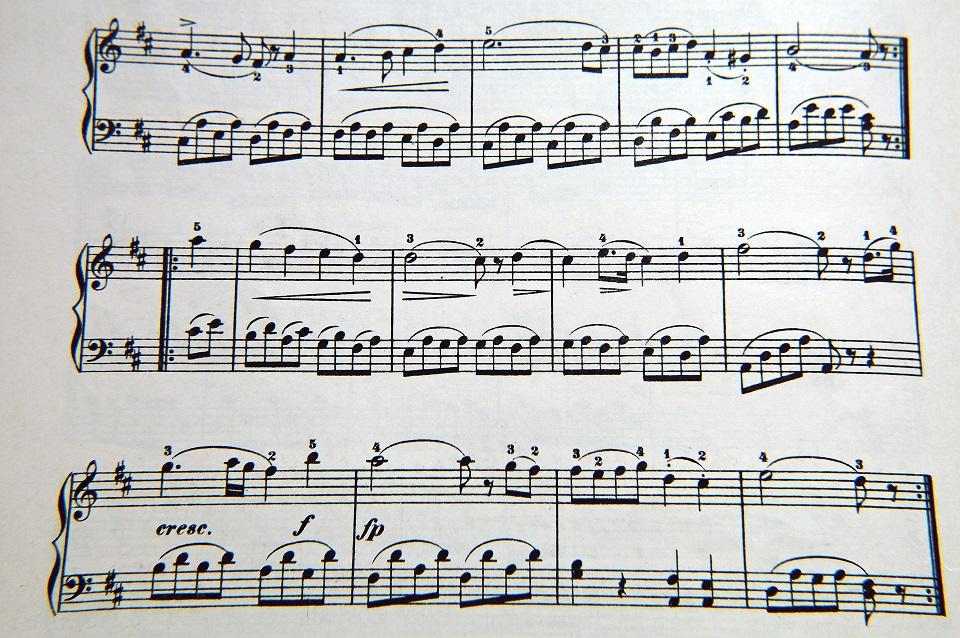
- demonstrate sight-reading capability appropriate for their level
- complete an aural exam
- undergo supplementary tests as indicated by each grade and examining the board’s syllabus
These supplemental tests may be anything from vocal exercises like arpeggios and ‘viva voce’ to improvisation and answering questions about music theory and Music Academies.

How will they assess your singing in Irish singing exams?
In Ireland, there are 8 grades to determine your competency as a singer. While you certainly don’t need to attain these formal credentials to prove yourself as a singer, They are certainly great milestones to mark your progress.
Students and singers can be entered for any grade irrespective of age and without previously having taken any other grade in Singing. This means that if you are a competent singer, then by all means you can throw yourself In the deep end and go straight to grade 4 or 5.
This is possible to a certain degree of course. If you are a singer looking to achieve a grade 6, 7 or 8, then you must have already passed the ABRSM Grade 5 (or above) in Music Theory, Practical Musicianship or a solo Jazz subject.
The exams are actually quite diverse in the songs that you are able to sing, making them much more enjoyable than any of the other exams that you would be used to from school. In all grades, singers will be required to perform an unaccompanied traditional (folk) song of their own choice, from memory.
A traditional song is defined as a folk song coming from the people of a region and forming part of their culture.
Folk songs are essentially colloquial and have no traceable composer, and they cover a broad range of topics, such as the natural world, love and romance, the cycle of life, work and relaxation, historical events, and situations of hardship, suffering, inequality and rebellion. So you are bound to find one that you like!
If you are thinking of going for the next grade in your music exams then you will likely be asked to sing a short piece of music that you have not previously seen. So be prepared to be put on the spot!
This Sight-singing test will be accompanied by the examiner at the piano. The tests for Grades 1–5 are printed without words and may be sung to any vowel, while the exam for Grades 6–8 is usually printed with clear, simple and singable words in English.
Don’t stress too much about the unseen songs, as you will be given half a minute in which to look through and, if you wish, try out any part of the test by yourself. Believe me, this is much longer than it sounds and it can really be put to good use if you make the most of it!
The examiner will also let you know when to start so don’t worry about whether or not you should be getting on with the song. They will play the key chord and starting note before the preparation time and again before the actual assessment.
Now that we’ve covered what happens behind closed doors of Irish singing exams, let’s touch on some of the other questions that you might have about getting your grades!

How your Singing Exams are Graded
So since we have covered the structure of the Irish singing exams and what exactly they entail at the different levels, you might be wondering how they are graded. If your performance is spot-on, you don’t rush the song and keep the tone; if your rendering shapes the piece well, you can count on achieving high marks.
A distinction is the highest recognition you can earn on a graded exam; it ranks above Merit, which is awarded when a singing student has performed beyond the marks range for Pass.
If you are an aspiring singer with serious intent, namely earning your Bachelor’s or Masters’ from London College of Music, Trinity Music College or any conservatoire, ‘distinction’ is where you should set your sights.
Besides, after attending all of those music classes and singing lessons, surely you aim to do as well as possible on your graded exam, right? There’s just no sense doing anything in half-measures, you’ll get much more satisfaction and see a whole lot more progress if you apply yourself.
To get a distinction, you need to earn the highest marks possible in five areas of your singing: tone, time, pitch, shape, and performance.
If your performance is spot-on, you don’t rush the song and keep the tone; if your rendering ‘shapes’ the piece well, you can count on high marks.
Each of the singing grade’s exam boards will test you on sight-reading and aural capability but, depending on which exam board you test through, your syllabus might specify arpeggios, folk, jazz, improvisation or music theory.
See? Not only is it easy to get a distinction on your graded exam but you can earn a distinction in all of the exams that you take!
Every candidate has the chance to get a distinction at every grade.
Progress through the Grades with a music coach from Superporf
Remember: these grades are not like textbook learning and examination. If you skip a whole chapter in your math book, for instance, you will have trouble grasping math concepts further on.
Not so with skipping a singing grade exam. Each level is cumulative rather than task-oriented, meaning that no grade has exclusive requirements… save for grade 5, wherein you will test your knowledge of musical theory along with the standard elements.
It really doesn’t matter what your personal goals are with singing. whether you are preparing to sing at a wedding, trying to catch up with your college course or studying music for the leaving cert. Superprof singing tutors are ready to cater for all different levels and challenges that arise.
What’s even better, the singing teachers will be familiar with best practice singing techniques to get the most out of your voice. You can prepare with the reassurance that they will have excellent teaching skills and know-how to be patient in helping you to achieve your goals, starting from the very first lesson.
With countless qualified tutors available online with just a few simple clicks of a mouse, you’ll waste no time finding the right fit for you! The number of these singing coaches helping singers just like yourself to achieve their goals and progress through the grades continues to grow each year.
The eight graded exams for singing ensure that each vocalist does just that. You can achieve this in no time with the right tutor from Superprof, so why not give a shot and try a singing coach out today!
Now, maximise your potential for success on your singing exams with these tips!
Summarise with AI:
Did you like this article? Leave a rating!

 Loading...