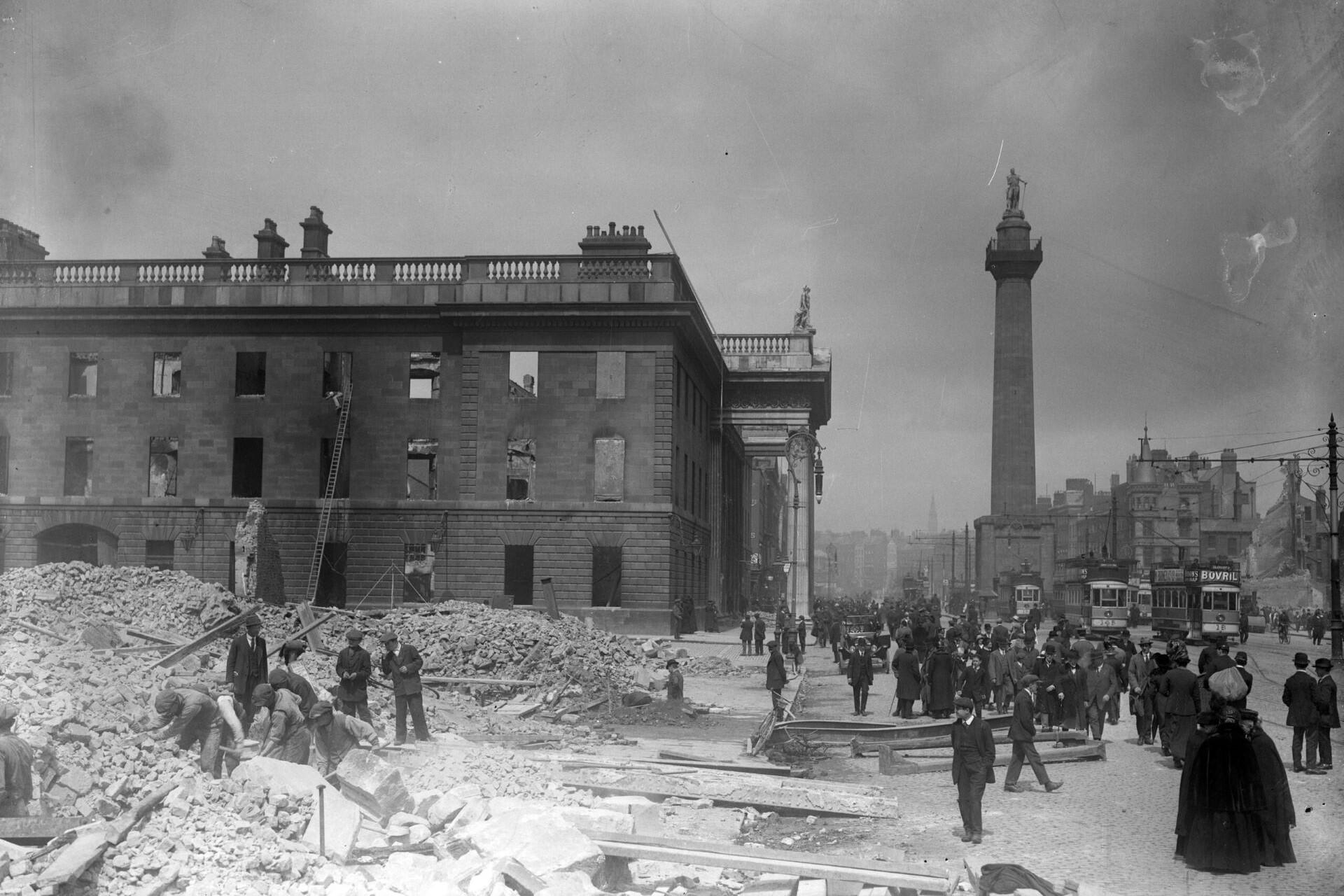

The 1916 Easter Rising was a key event in Ireland's struggle for independence. A military failure, it was the event that shifted public opinion, garnering massive sympathy and support for the cause. This is an event with a lot of nuance and context to explore, but here, we'll give you an introduction to the causes, events, and legacy of the 1916 Easter Rising.


What Was the Easter Rising?
The Easter Rising took place in Dublin during Easter Week in April 1916 and was one of the most important moments in Irish history. Organised by Irish republican groups, its aim was to end British rule in Ireland and establish independence for Ireland. It was militarily successful, but it also spurred support for independence.
The Easter Rising was an armed rebellion that took place in Dublin during Easter Week in April 1916. Organised by Irish republican groups, it aimed to end British rule in Ireland and establish an independent Irish Republic.
Why the 1916 Rising Took Place
Irish nationalists believed that meaningful self-governance for Ireland could no longer be achieved by constitutional methods. British rule, political frustration, and Irish cultural revival all made revolution more appealing. When the First World War broke out, everything was in place for meaningful rebellion.
British Rule and Irish Revolutionary Nationalism
The British exerted authority over Ireland using politics, policing, and the military. National groups didn't feel this system supported Irish self-determination, despite political promises to move towards it, with some feeling even promises made during the famine were still falling on deaf ears. Ultimately, revolutionary nationalism grew more popular since peaceful options proved unsuccessful.
The Irish Republican Brotherhood and the Volunteers
The Irish Republican Brotherhood was a secret organisation. It aimed to establish an Irish republic by working closely with the Irish Volunteers, providing manpower for the Rising. A small military council within the movement carried out the planning for the uprising.
How the Easter Rising Began in April 1916
On Easter Monday, 24 April 1916, Rebel forces seized key buildings across Dublin. They declared an Irish Republic and openly rebelled against British rule. The event would change the course of Irish history forever.
days.
Easter Monday and the Seizure of Key Buildings
With sites like the General Post Office, Boland's Mill, and Jacob's Factory under their control, the rebels held multiple strategically and symbolically essential sites. The aim was to disrupt British administration.
The Proclamation of the Irish Republic
Ireland, through us, summons her children to her flag and strikes for her freedom.
Proclamation of the Irish Republic, 1916
The Proclamation of the Irish Republic was read aloud to the public outside the GPO. It announced the creation of a provisional government and asserted Ireland's right to independence. The document became one of Ireland's most important historical texts.
The Proclamation of the Irish Republic was read outside the General Post Office in Dublin on Easter Monday, 1916. It announced the establishment of an Irish Republic and named a provisional government made up of the Rising's leaders.
Fighting During Easter Week in Dublin
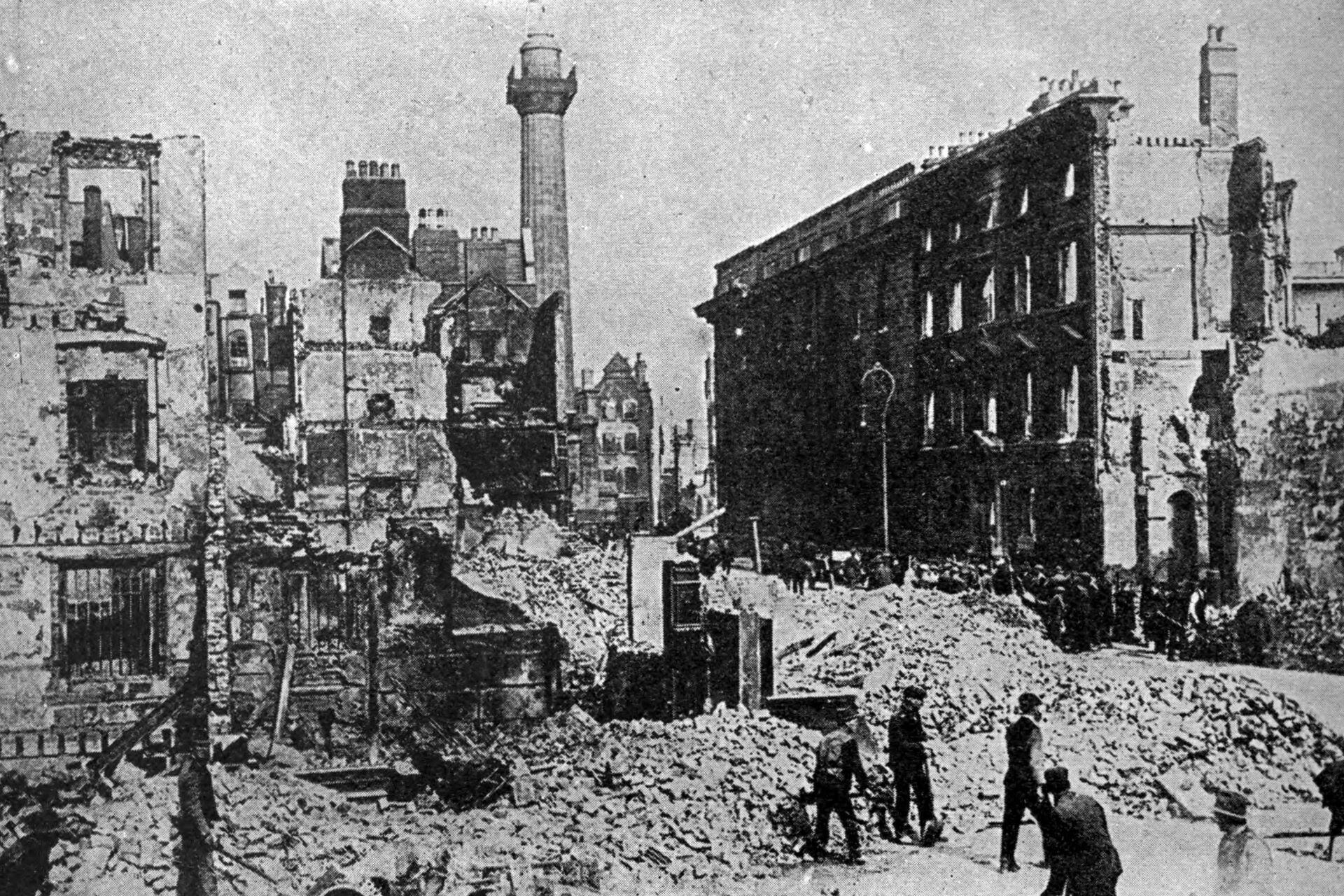
Throughout the week, British forces fought to suppress the rebellion. There were street battles, sniper fire, and even artillery shelling. There was widespread destruction, and civilians were caught in the middle of the conflict.
The GPO and Rebel Headquarters
There was heavy fighting around the General Post Office. The building had been chosen to be the main rebel headquarters. After being badly damaged, the GPO was evacuated.
Street Fighting and Civilian Impact
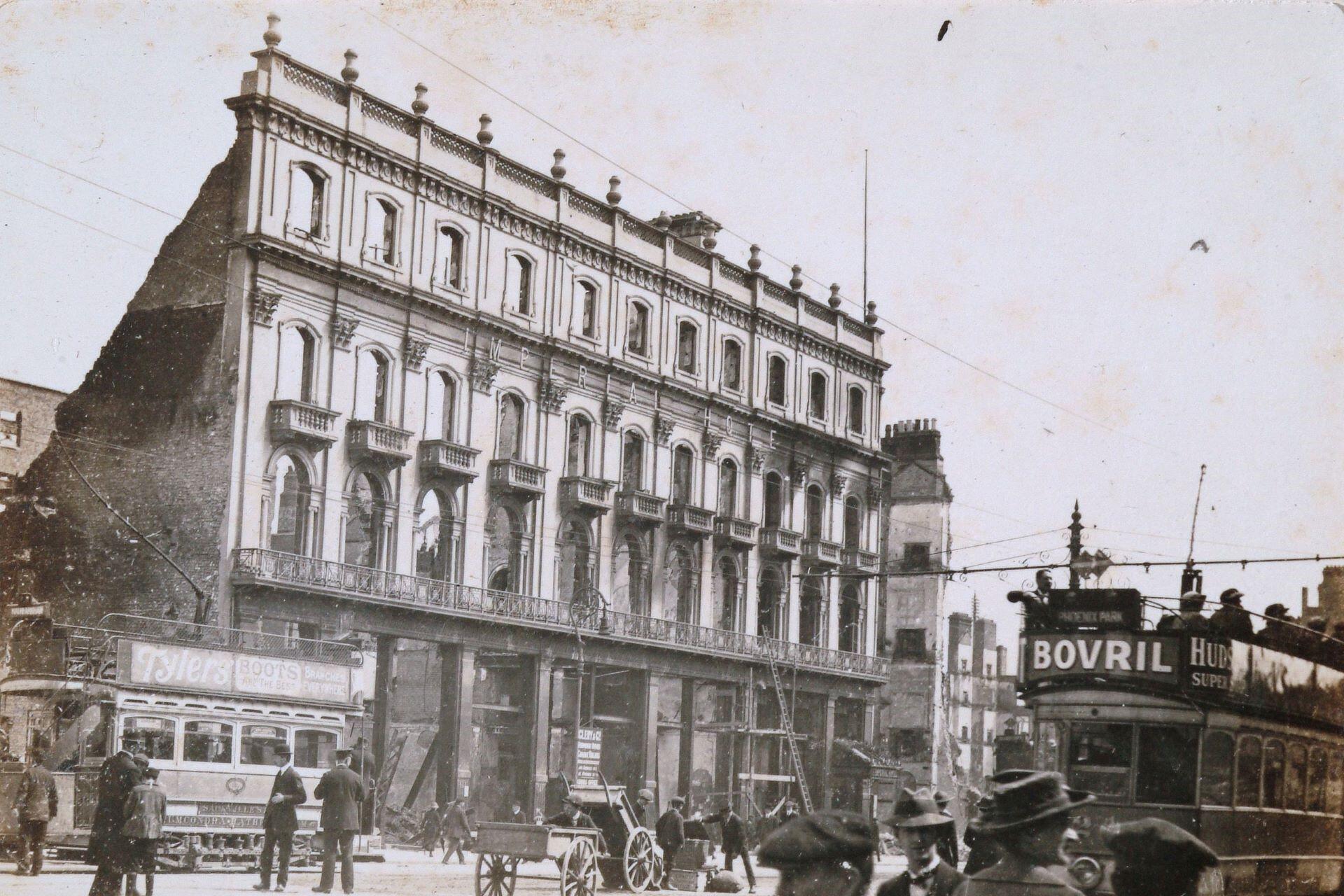
Fighting took place across the residential and commercial streets of Dublin. Civilians ended up trapped in their homes or even caught in crossfire. In addition to the human cost, large parts of Dublin city centre were left in ruins.
British Military Response and Suppression
The British sent large numbers of troops to Dublin. Martial law was introduced to control the spreading rebellion. However, with superior numbers and better equipment, the British forces regained control.
British Troops, Artillery, and Martial Law
During the rebellion, British troops used artillery to dislodge rebel garrisons from buildings. Thousands of British soldiers were deployed, and martial law gave the military sweeping powers. Ultimately, the heavy-handed response of the British forces would mean the battle may have been lost, but the war for the Irish republicans could be won.
The Surrender of the Rebels
Rebel leaders surrendered at the end of Easter Week. Pádraig Pearse issued the order to surrender, potentially saving further civilian deaths. The Rising formally ended on 29 April 1916.
Key Figures of the 1916 Easter Rising
The Easter Rising will be remembered for its role in Irish independence, particularly the Irish War of Independence that later followed. During it, a group of influential leaders were involved. These people aren't the only ones involved, but they each played a key role in the Rising. Like much of Irish history, there's a lot of nuance to unpack, but the variety of people involved and their roles show how it wasn't simply a political or military event.
Pádraig Pearse
Pádraig Pearse was the public face of the Easter Rising. Pearse read the Proclamation and ordered the surrender. He was remembered as a powerful symbol of Irish nationalism.
James Connolly
James Connolly was the leader of the Irish Citizen Army. Despite being badly wounded, he continued to direct operations. His execution was so shocking that it helped garner sympathy for the cause.
Thomas J. Clarke
Thomas J. Clarke was a senior figure in the Irish Republican Brotherhood. He helped plan the rising. In the Proclamation of the Irish Republic, his name appears first, making him one of the most famous people in Irish history.
Executions, Public Reaction, and Political Change
British authorities arrested thousands of suspected rebels. The military courts sentenced many of the leaders to death. While these actions by the British were intended to suppress the rebellion, they actually strengthened it by altering public opinion in Ireland.
leaders were executed.
The Execution of the Rising’s Leaders
Just days after the Rising had ended, executions were already taking place. Many of the senior leaders and signatories of the Proclamation were executed. Many were angry at how many people were executed and how quickly British authorities chose to do it.
Following the surrender, British authorities arrested thousands of suspected rebels and executed the Rising’s leaders. These actions shifted public opinion in Ireland and played a key role in the growth of support for independence.
How Public Opinion Shifted After 1916
While the initial reaction to the Rising was mixed, attitudes changed over time as the British continued to execute those involved. Support for independence and republican movements grew, contrary to the British's intentions. Ultimately, the heavy-handed response of the British authorities helped pave the way for future independence movements.
The Legacy of the Easter Rising
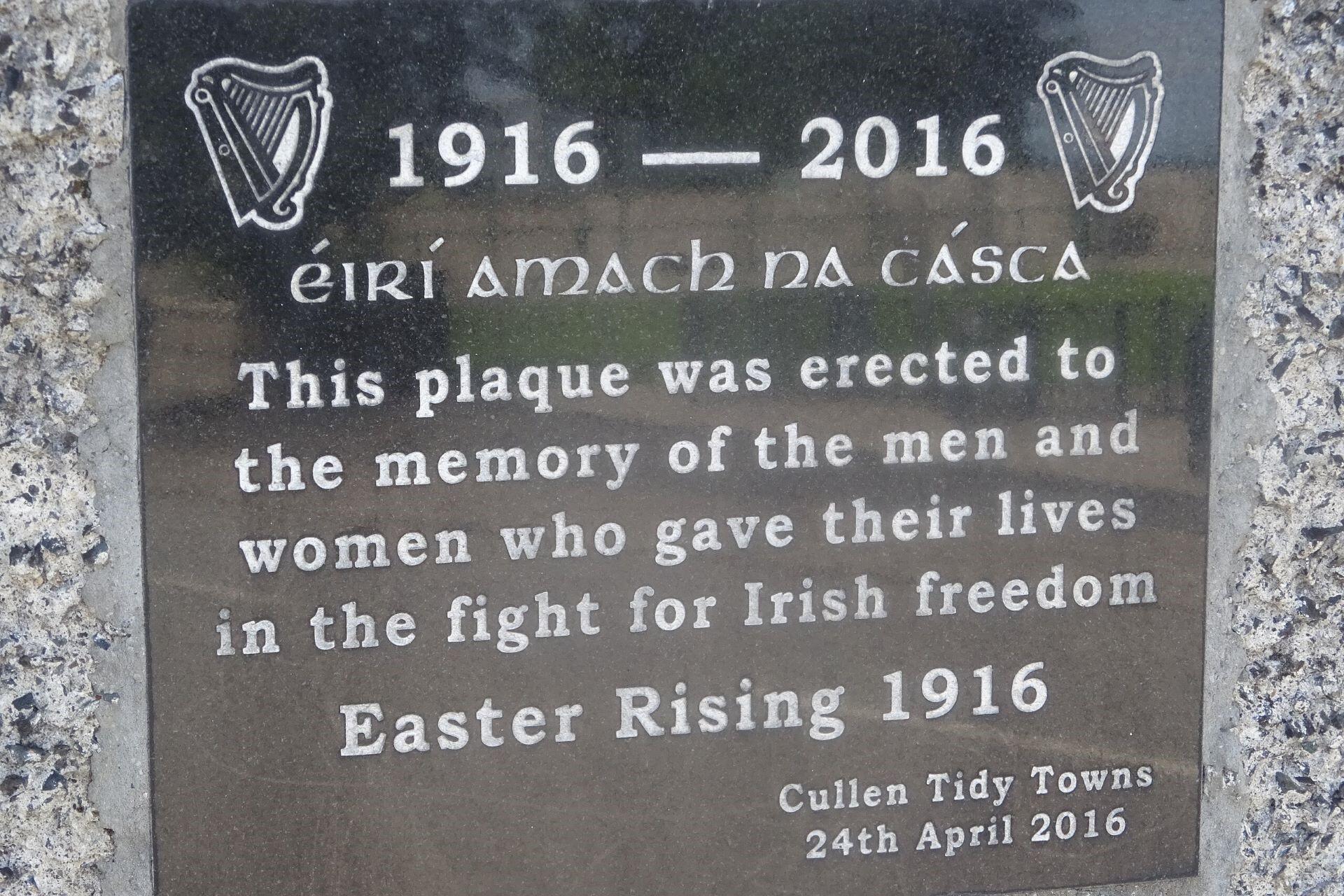
The Easter Rising was a military failure, but it actually remains one of the key events on Ireland's road to independence. It reshaped the country's political attitudes and directly influenced the later struggles for freedom. The event remains central to Irish national identity. In Ireland, the Rising helped shift the focus from constitutional politics to revolutionary action. The events of 1916 were forever in the memories of those leading the country towards independence.
Summarise with AI:
Did you like this article? Leave a rating!

 Loading...