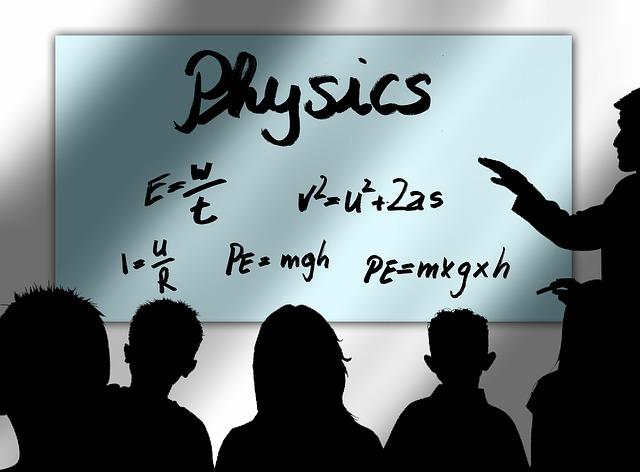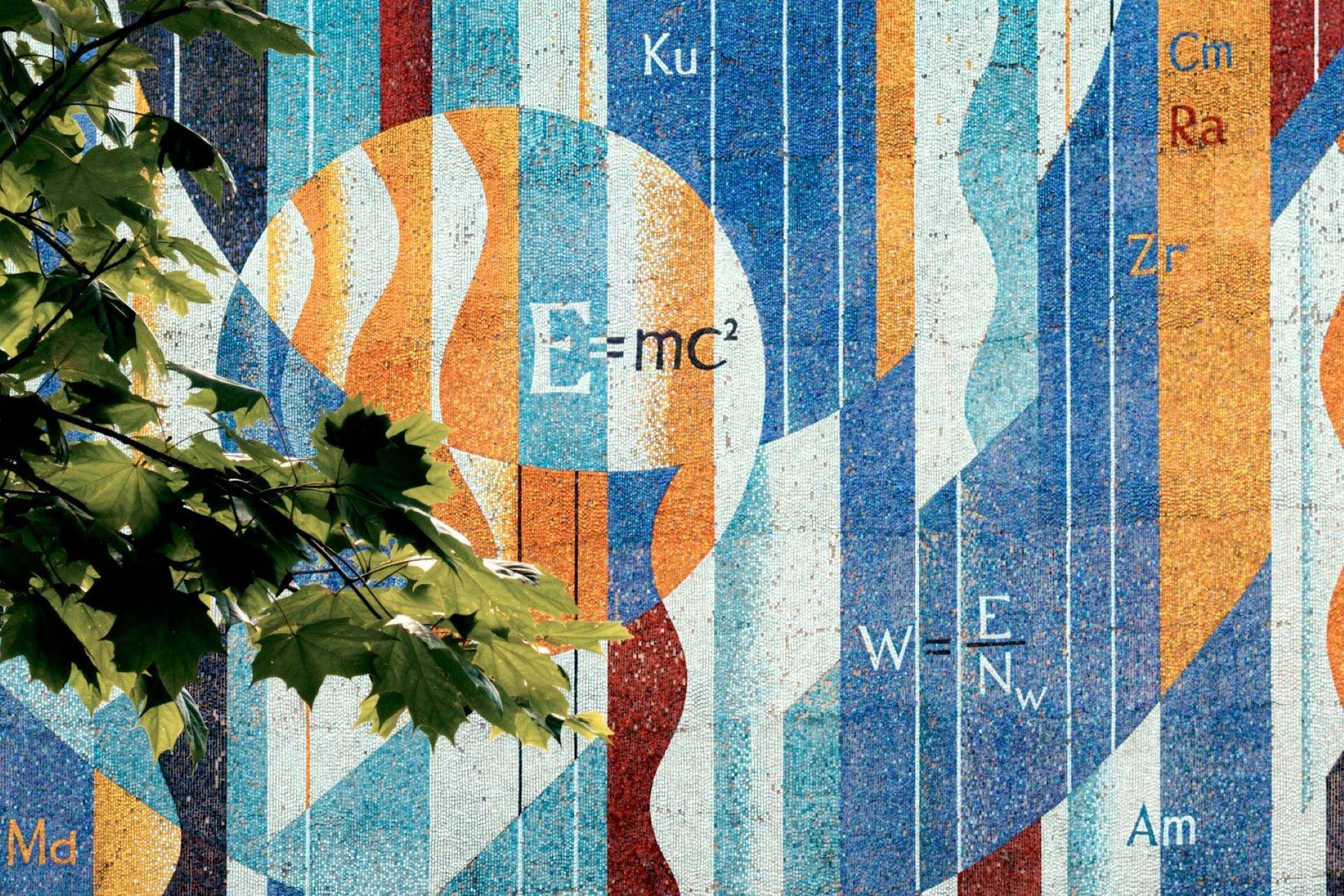

Physics can help us understand how the world works. Here, we'll look at some physics fundamentals. Let's see what physics is all about.
Key Takeaways
- Physics studies matter, energy, motion, forces, space and time.
- The most important beginner concepts are motion, force, energy, waves, matter and measurement.
- Key formulas such as F=maF = maF=ma, W=FdW = FdW=Fd, Ek=12mv2E_k = \frac{1}{2}mv^2Ek=21mv2 and v=fλv = f\lambdav=fλ become easier when linked to real situations.
- The four fundamental forces are gravity, electromagnetism, the strong nuclear force and the weak nuclear force.
- Classical physics explains many everyday situations, while relativity and quantum physics help explain extreme speeds, gravity, particles and the structure of matter.


What Is Physics?
Physics is a branch of science. It focuses on how the physical world works. Put simply, physics is a set of tools for explaining motion, energy, forces, matter and the universe around us.⁷
Physics is the science of matter, energy, motion, forces, space and time. It helps explain everything from why objects fall to Earth to how light travels, how electricity works and how scientists study the universe.⁷
Everyday Physics
Physics explains the movement, forces and energy changes we see every day. It helps us understand why a bike slows down, why a ball falls, how sound travels, why electricity powers devices and how light lets us see. These examples make physics feel less abstract by connecting directly to real objects and familiar experiences.⁷
Universe-Scale Physics
Physics also explains things that are too large, too small or too distant to experience directly. It helps scientists study stars, planets, atoms, radiation, quantum particles and gravitational waves. The same subject can describe a falling apple, a magnetic field, a nuclear reaction and the expansion of the universe.⁵
Core Physics Concepts Every Student Should Know
Before you tackle complex equations, you should know the basic ideas and physics terms. These will appear again and again when you study physics. Motion, force, energy, waves and matter are the building blocks that make later topics easier to understand.⁶
Motion, Speed and Acceleration
Forces and Newton’s Laws
Energy, Work and Power
A force is a push or pull. Work happens when a force moves an object. Energy is the ability to do work, and power is the rate at which work is done. These ideas are closely connected, but keeping them separate makes physics equations much easier to understand.⁶
Waves, Light and Radiation

Matter, Mass and States of Matter
Essential Physics Equations Explained Simply
Equations relate measurable quantities to one another and are a key concept of physics. Don't memorise formulas in isolation. Instead, connect each equation to a real situation, the correct units and the physical idea behind it.⁶
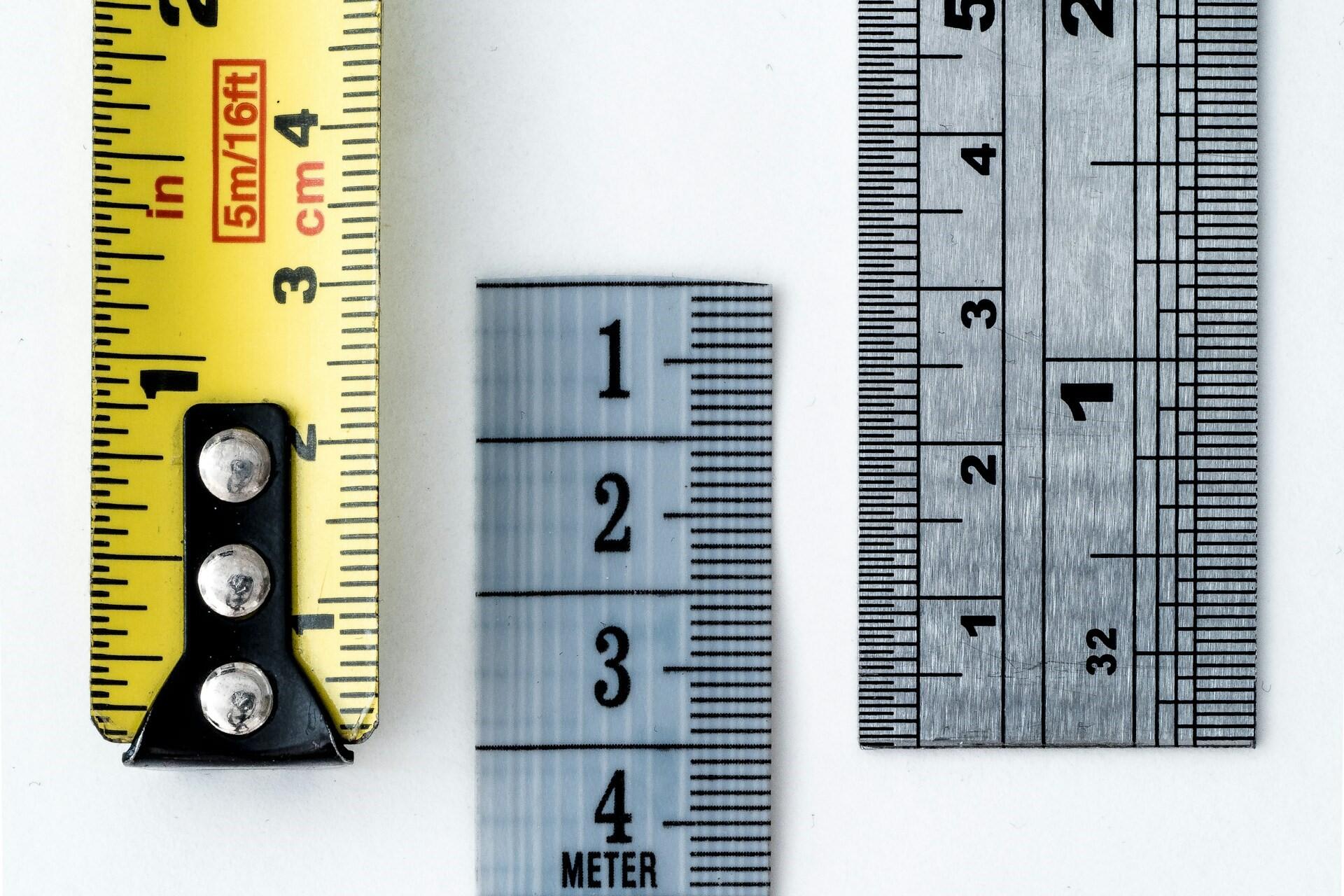
base units, including the metre, kilogram, second, ampere, kelvin, mole and candela.
Start with the Situation
Before choosing a formula, ask what is happening. Is an object moving, speeding up, slowing down, falling, being pushed, transferring energy or producing a wave? Identifying the physical situation first makes the equation easier to choose and easier to understand.⁶
Then Choose the Units
Physics depends on clear measurement. Speed, force, mass, time, energy, wavelength and frequency all need the right units, which is why the International System of Units matters. Once the quantities and units are clear, the maths becomes much less confusing.⁹
Force and Motion
Force equals mass multiplied by acceleration.
Energy and Work
Work
Work equals force multiplied by distance.
Kinetic energy
Kinetic energy equals one-half multiplied by mass multiplied by speed squared.
Waves and Frequency
Wave speed
Wave speed equals frequency multiplied by wavelength.
The Four Fundamental Forces
One interesting fact about physics is that there are four fundamental forces. The forces can be used to explain everything from falling objects and magnetic fields to atomic nuclei and particle interactions.³ It's worth familiarising yourself with them.
fundamental forces: gravity, electromagnetism, the strong nuclear force and the weak nuclear force.³
Gravity
Electromagnetism
Strong and Weak Nuclear Forces
Classical Physics, Relativity and Quantum Physics
Physics can be split into classical physics and modern physics. Classical physics is good for everyday situations. However, relativity and quantum physics are needed for extreme speeds, strong gravity, tiny particles and the structure of matter.²
Classical physics is useful for everyday objects, motion, forces, waves and energy. Modern physics becomes essential when scientists study very small particles, very high speeds, quantum behaviour, relativity and the structure of matter.²
Classical Mechanics
Relativity
years later, in 2016.⁵
Quantum and Particle Physics
Famous Physicists and Their Discoveries
Physics, like any other science, advances through people who ask better questions, test ideas and share discoveries. It also depends on effective teaching. From Archimedes and Newton to Einstein and modern researchers, there are some big names in physics.
Archimedes, Galileo and Newton
- Archimedes is linked with buoyancy and the behaviour of objects in fluids.
- Archimedes’ principle explains why objects float or sink.¹
- Galileo helped change how scientists studied motion.
- Galileo’s work supported observation and experiment over assumption.
- Newton connected force and motion through laws that are still taught today.
- These early discoveries helped physics become a mathematical science.
Einstein and Modern Physics
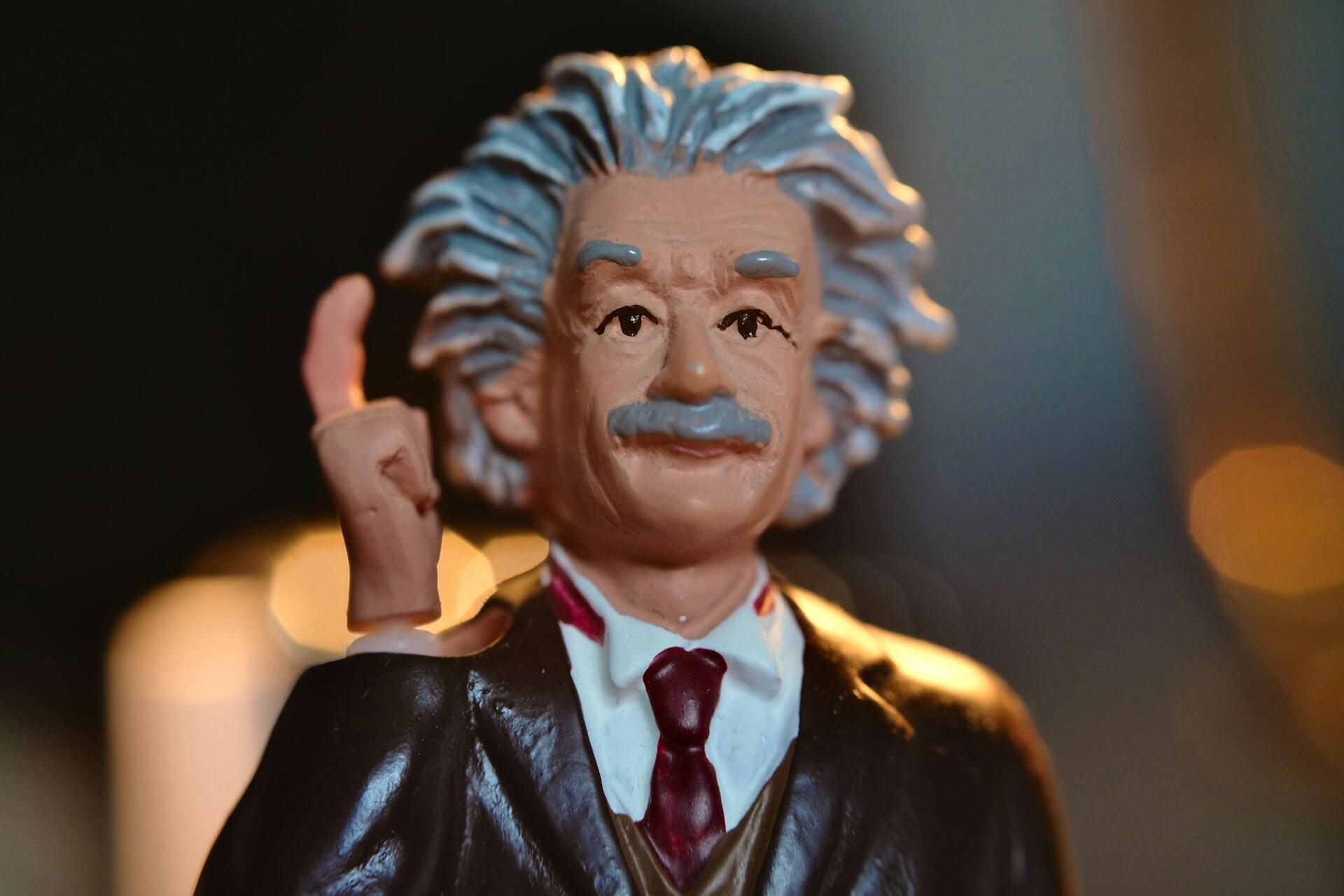
- Einstein is central to modern ideas about space, time, gravity and energy.
- Special relativity changed how physicists think about motion at very high speeds.
- General relativity changed how physicists explain gravity.
- His work helped connect physics with astronomy and cosmology.
- Some predictions of relativity were tested long after they were proposed.
- Gravitational wave detection is one major modern example.⁵
Physics Researchers Today
- Physics research continues to explore unanswered questions about matter, energy, and the universe.
- Quantum physics is used in research on particles, materials and future technologies.
- Plasma physics supports research into fusion energy and space science.¹⁰
- Particle physics uses large experiments to study fundamental particles.
- Physics also supports medicine, engineering, computing and climate science.
- The subject keeps changing as new measurements, tools, and discoveries appear.
References
- Britannica, The Editors of Encyclopaedia. “Archimedes’ Principle.” Encyclopaedia Britannica, https://www.britannica.com/science/Archimedes-principle. Accessed 25 May 2026.
- Caltech Science Exchange. “What Is Quantum Physics?” California Institute of Technology, https://scienceexchange.caltech.edu/topics/quantum-science-explained/quantum-physics. Accessed 25 May 2026.
- CERN. “The Standard Model.” CERN, https://home.cern/science/physics/standard-model/. Accessed 25 May 2026.
- Institute of Physics. “The Physics Teacher Shortage and Addressing It through the 3Rs: Retention, Recruitment and Retraining (England).” Institute of Physics, https://www.iop.org/about/publications/physics-teacher-shortage-and-addressing-it-through-3rs. Accessed 25 May 2026.
- LIGO Laboratory. “Gravitational Waves Detected 100 Years after Einstein’s Prediction.” LIGO Lab, Caltech, 11 Feb. 2016, https://www.ligo.caltech.edu/news/ligo20160211. Accessed 25 May 2026.
- Ling, Samuel J., Jeff Sanny, and William Moebs. University Physics Volume 1. OpenStax, 2016, https://openstax.org/details/books/university-physics-volume-1. Accessed 25 May 2026.
- Michigan Technological University. “What Is Physics?” Michigan Technological University, https://www.mtu.edu/physics/what/. Accessed 25 May 2026.
- NASA Science. “Anatomy of an Electromagnetic Wave.” NASA, https://science.nasa.gov/ems/02_anatomy/. Accessed 25 May 2026.
- National Institute of Standards and Technology. “SI Units.” NIST, https://www.nist.gov/pml/owm/metric-si/si-units. Accessed 25 May 2026.
- Princeton Plasma Physics Laboratory. “About Plasmas and Fusion.” Princeton Plasma Physics Laboratory, https://www.pppl.gov/about/about-plasmas-and-fusion. Accessed 25 May 2026.
Summarise with AI:
Did you like this article? Leave a rating!

 Loading...