
Italy is one of the most popular countries in the world to visit. Looking to head on a city break or need an urban base for a larger Italian trip? Here are our favourite cities in Italy to visit.
Key Takeaways
- Rome is the strongest all-round choice for a first visit, especially if you want a mixture of major sights, museums and neighbourhood life.
- Florence, Venice and Milan offer three very different city breaks, ranging from Renaissance culture and canal-side exploration to contemporary fashion and design.
- Bologna and Naples stand out for food, while Genoa and Bari offer alternatives for travellers drawn to historic cities with strong maritime identities.
- Several cities work particularly well together by train, including Florence and Bologna, Rome and Naples, and Milan with Turin or Venice.⁴


Which Italian Cities Should You Visit?
If you've decided that you want to visit a city on a trip to Italy, at least you've slightly narrowed down your options. However, Italy is still full of great cities to visit, and there's something for everyone. For shorter breaks, you might want somewhere you can walk around. In contrast, Italy's bigger cities offer plenty of highlights if you have the time to explore.
There is no single best city in Italy for every traveller. We've balanced famous landmarks with food, history, regional variety and the overall experience each destination offers on a city break.
The 10 Best Italian Cities to Visit
Italy's cities each have their own distinctive feel. After all, many of its cities had centuries of history before Italy unified in 1861. This has allowed every region and city to have something unique. However, with nearly 200 years spent together as a single nation, there's something wonderfully "Italian" about all of them while they each offer something for different travellers, budgets, and tastes.
| City | Region | Best for | Main highlights |
|---|---|---|---|
| Rome | Lazio | Ancient history | Colosseum, Roman Forum, Trevi Fountain |
| Florence | Tuscany | Renaissance art | Duomo, Uffizi, Ponte Vecchio |
| Venice | Veneto | Canals and atmosphere | Grand Canal, St Mark's Square, Doge's Palace |
| Milan | Lombardy | Fashion and design | Duomo, Brera, Navigli |
| Bologna | Emilia-Romagna | Food | Piazza Maggiore, towers, porticoes |
| Naples | Campania | Food and history | Historic centre, Bay of Naples, archaeology |
| Verona | Veneto | Roman history and romance | Arena, Piazza Bra, historic centre |
| Turin | Piedmont | Museums and royal history | Egyptian Museum, Mole Antonelliana |
| Genoa | Liguria | Maritime history | Old Port, caruggi, Palazzi dei Rolli |
| Bari | Puglia | Adriatic culture | Bari Vecchia, Basilica di San Nicola |
1. Rome: Best for Ancient History and First-Time Visitors
Lazio
Ancient history
Colosseum, Roman Forum, Trevi Fountain
The city of Rome is built around history. This is a place where centuries of human activity have all been built upon one another, and the story of Rome is far from over. Enjoy the city's diverse architectural styles while visiting the country's most significant landmarks.⁸
2. Florence: Best for Renaissance Art
Tuscany
Renaissance art
Duomo, Uffizi, Ponte Vecchio
Florence is one of Italy's more walkable cities. The main centre is very walkable and completely packed with everything from formal squares and grand palazzi to quieter streets, artisan workshops and views across the Arno. One of the Renaissance's most important cities, it was a key centre of art and architecture, and you can still see the legacy of powerful families like the Medici.³
3. Venice: Best for Canals and a Unique City Break
Veneto
Canals and atmosphere
Grand Canal, St Mark's Square, Doge's Palace
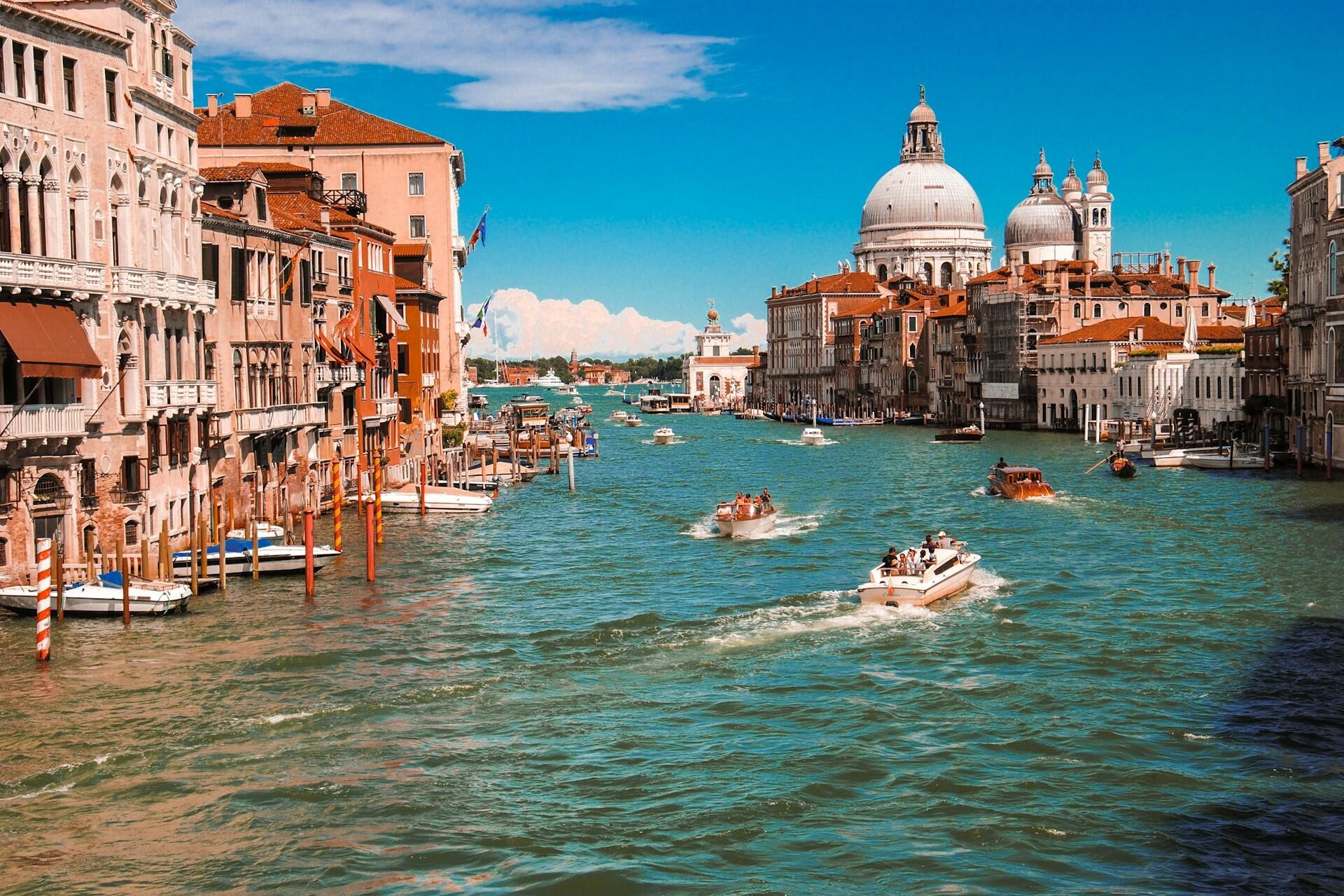
Venice is like no other city in the world and one of the best things to see in Italy. For one, have you ever been to such a large city without seeing a single car? Aside from that, you can walk (and regularly get lost) alongside its many canals. Of course, if you get completely lost, you can take to the waterways, with vaporetti and water taxis offering the city's equivalent to traffic and public transport.
islands connected by more than 400 bridges.¹⁰
4. Milan: Best for Fashion, Design and Modern Italy
Lombardy
Fashion and design
Duomo, Brera, Navigli
Milan is one of Italy's fastest-growing cities. It combines historic architecture with business districts, contemporary cultural spaces and neighbourhoods that feel firmly connected to modern European city life. This is a city whose history is in its culture; from fashion and design to its artistic, musical and commercial history, it explains why you can see old churches, theatres and galleries alongside some of Italy's most ambitious modern architecture.⁶
5. Bologna: Best for Food and Portico-Lined Streets
Emilia-Romagna
Food
Piazza Maggiore, towers, porticoes
With Bologna, you can enjoy the advantages of a major Italian city without the tourism found in many others. Bologna has a large student population, busy cafés, and an energetic, lived-in feel a lot of the year. Its university tradition is centuries old, and its distinctive architecture gives it a look as unique as the food Emilia-Romagna is so famous for.¹ This is a city for taking things more slowly or when you don't feel like creating a busy itinerary.
Italian food changes considerably from one region to another. Bologna is known for dishes such as tortellini and tagliatelle al ragù. At the same time, Naples is inseparable from pizza, and Liguria is closely associated with pesto.¹
6. Naples: Best for Pizza, History and Street Life
Campania
Food and history
Historic centre, Bay of Naples, archaeology
Naples is a dense, noisy, and animated city. This city is vibrant, with Neapolitans living their lives around churches, markets, balconies, cafés and tightly packed lanes in a way that feels very different from the more polished centres of northern Italy. The Bay of Naples made Naples one of southern Italy's most historically important urban centres and means that the city has been shaped by centuries of Greek, Roman, Spanish and other Mediterranean influences.⁷ It's also a convenient base for going to Pompeii, Vesuvius or the nearby coast. However, there's plenty to do in the city itself.
7. Verona: Best for Roman History and Romance
Veneto
Roman history and romance
Arena di Verona, Piazza Bra, historic centre
Verona is arguably the most romantic city in Italy. It's home to river views, historic streets and quieter corners, and while its link to Shakespeare is what many people know it for, there's so much more to it than that. Roman remains and later medieval and Renaissance development have all contributed to the layered appearance of the city that visitors see today.¹⁰ This is another option for those who want to take it slow.
8. Turin: Best for Museums and Royal History
Piedmont
Museums and royal history
Egyptian Museum, Mole Antonelliana
Turin feels more formal and ordered than many other Italian cities. After all, it was an important royal and political centre for years. Over centuries, the House of Savoy turned Turin into a powerful and important city, and it was even the first capital of the unified Kingdom of Italy in 1861.⁹
9. Genoa: Best for Maritime History
Liguria
Maritime history
Old Port, caruggi, Palazzi dei Rolli
Genoa has steep streets, narrow passages, and incredible views. The old centre, surrounding hills, and Mediterranean waterfront create unforgettable scenes. Historically a great seafaring power, Genoa's wealth, architecture and urban form were strongly shaped by its connections with ports and trading networks far beyond Liguria.⁵
Cinque Terre is well worth visiting, but it is not a single Italian city. The name refers to five Ligurian villages: Monterosso al Mare, Vernazza, Corniglia, Manarola and Riomaggiore.⁵
10. Bari: Best for Puglia and the Adriatic
Puglia
Adriatic culture
Bari Vecchia, Basilica di San Nicola
A relaxed southern atmosphere, unlike that of Rome or Milan, makes Bari an excellent alternative if you're looking for something different. Bari was an important point of contact between Italy and the eastern Mediterranean, with centuries of trade and movement influencing the city's character.² Take your time and enjoy the contrast between Bari's older small streets and modern districts.
How to Combine Italian Cities by Train
Thanks to the trains and accommodation in Italy, you can turn a trip into a multi-city holiday. We're not saying (or necessarily recommending) that you try to cross the whole country by train in Italy, but they are good enough to connect a few nearby cities. Here are a few options if you'd like to head to a specific part of the country and visit several cities on your trip.
| Route | Approx. journey time | Why combine them |
|---|---|---|
| Milan → Turin | 57 minutes | Modern Milan with historic Turin |
| Milan → Venice | 2 hours 30 minutes | Fashion and design followed by canals and historic Venice |
| Florence → Bologna | 30 minutes | Renaissance art with Emilia-Romagna food |
| Bologna → Venice | 1 hour 30 minutes | Food-focused Bologna with Venice |
| Florence → Rome | 1 hour 30 minutes | Renaissance Florence with ancient Rome |
| Rome → Naples | Just over 1 hour | Italy's capital with a major southern city |
Which Italian city would you visit first?
References
- “Bologna: Young, Cultured and Welcoming.” Italia.it, ENIT S.p.A., https://www.italia.it/en/emilia-romagna/bologna/guide-history-facts. Accessed 29 Aug. 2026.
- “Discovering Bari, an Unexpected Meeting Point between East and West.” Italia.it, ENIT S.p.A., https://www.italia.it/en/puglia/bari/guide-history-facts. Accessed 29 Aug. 2026.
- “Discovering Florence, the City That Symbolises the Renaissance.” Italia.it, ENIT S.p.A., https://www.italia.it/en/tuscany/florence/guide-history-facts. Accessed 29 Aug. 2026.
- “High-Speed Rail in Italy: All the Cities to Visit by Train.” Italia.it, ENIT S.p.A., https://www.italia.it/en/italy/things-to-do/high-speed-trains-in-italy-best-cities-to-visit. Accessed 29 Aug. 2026.
- “Liguria, a Wealth of Beauty between Bays and Historic Towns.” Italia.it, ENIT S.p.A., https://www.italia.it/en/liguria/guide-history-facts. Accessed 29 Aug. 2026.
- “Milan: Much More Than the World’s Fashion Capital.” Italia.it, ENIT S.p.A., https://www.italia.it/en/lombardy/milan/guide-history-facts. Accessed 29 Aug. 2026.
- “Naples, an Enchanting City of Sea and Culture.” Italia.it, ENIT S.p.A., https://www.italia.it/en/campania/naples/guide-history-facts. Accessed 29 Aug. 2026.
- “Rome: The Irresistible Allure of the Eternal City.” Italia.it, ENIT S.p.A., https://www.italia.it/en/lazio/rome/guide-history-facts. Accessed 29 Aug. 2026.
- “Turin, a Noble Capital Transformed into a Cultural Melting Pot.” Italia.it, ENIT S.p.A., https://www.italia.it/en/piedmont/turin/guide-history-facts. Accessed 29 Aug. 2026.
- “Veneto.” Italia.it, ENIT S.p.A., https://www.italia.it/en/veneto. Accessed 29 Aug. 2026.
Summarise with AI:
Did you like this article? Leave a rating!

 Loading...