Have you heard of hurling? Don't worry if you haven't. Here's our quick guide to the sport and how to get involved.

Key Takeaways

  • Hurling is played with a wooden hurley and a small ball called a sliotar.
  • A score over the crossbar earns one point, while a goal beneath it is worth three.
  • Each senior team fields 15 players, including one goalkeeper and 14 outfield players.
  • Hurling has no confirmed invention date, although its traditions extend back thousands of years.
  • The GAA standardised the modern game, which UNESCO recognised as intangible cultural heritage in 2018.
The best Fitness tutors available
Ger
5
5 (4 reviews)
Ger
€15
/h
Gift icon
1st lesson free!
Kate
5
5 (3 reviews)
Kate
€25
/h
Gift icon
1st lesson free!
Camilla
5
5 (1 reviews)
Camilla
€25
/h
Gift icon
1st lesson free!
Joe
5
5 (2 reviews)
Joe
€40
/h
Gift icon
1st lesson free!
Antonio
5
5 (4 reviews)
Antonio
€40
/h
Gift icon
1st lesson free!
Nicolaz
5
5 (3 reviews)
Nicolaz
€40
/h
Gift icon
1st lesson free!
Kate
Kate
€15
/h
Gift icon
1st lesson free!
Barbora
5
5 (1 reviews)
Barbora
€50
/h
Gift icon
1st lesson free!
Ger
5
5 (4 reviews)
Ger
€15
/h
Gift icon
1st lesson free!
Kate
5
5 (3 reviews)
Kate
€25
/h
Gift icon
1st lesson free!
Camilla
5
5 (1 reviews)
Camilla
€25
/h
Gift icon
1st lesson free!
Joe
5
5 (2 reviews)
Joe
€40
/h
Gift icon
1st lesson free!
Antonio
5
5 (4 reviews)
Antonio
€40
/h
Gift icon
1st lesson free!
Nicolaz
5
5 (3 reviews)
Nicolaz
€40
/h
Gift icon
1st lesson free!
Kate
Kate
€15
/h
Gift icon
1st lesson free!
Barbora
5
5 (1 reviews)
Barbora
€50
/h
Gift icon
1st lesson free!
Let's go

What is Hurling?

Hurling is a traditional Irish sport. It's played with a wooden hurley and a small ball called a sliotar. Since players can strike the ball in the air or on the ground, catch it, and carry it before passing or shooting, it's one of the fastest sports in the world.⁸

exposure_plus_1
How to Read a Hurling Score

A point is scored when the sliotar passes between the upright posts and over the crossbar, while a goal is scored when it enters the net beneath the crossbar.⁸ A point is worth one, while a goal is worth three. A score of 2-18, therefore, represents two goals and 18 points, for a combined total of 24.

The Basics of the Game
Objective: Outscore the opposition by sending the sliotar through their goalposts.
Movement: Players may strike, catch, kick or hand-pass the ball.
Possession: A player can take a limited number of steps before releasing the sliotar or balancing it on the hurley.
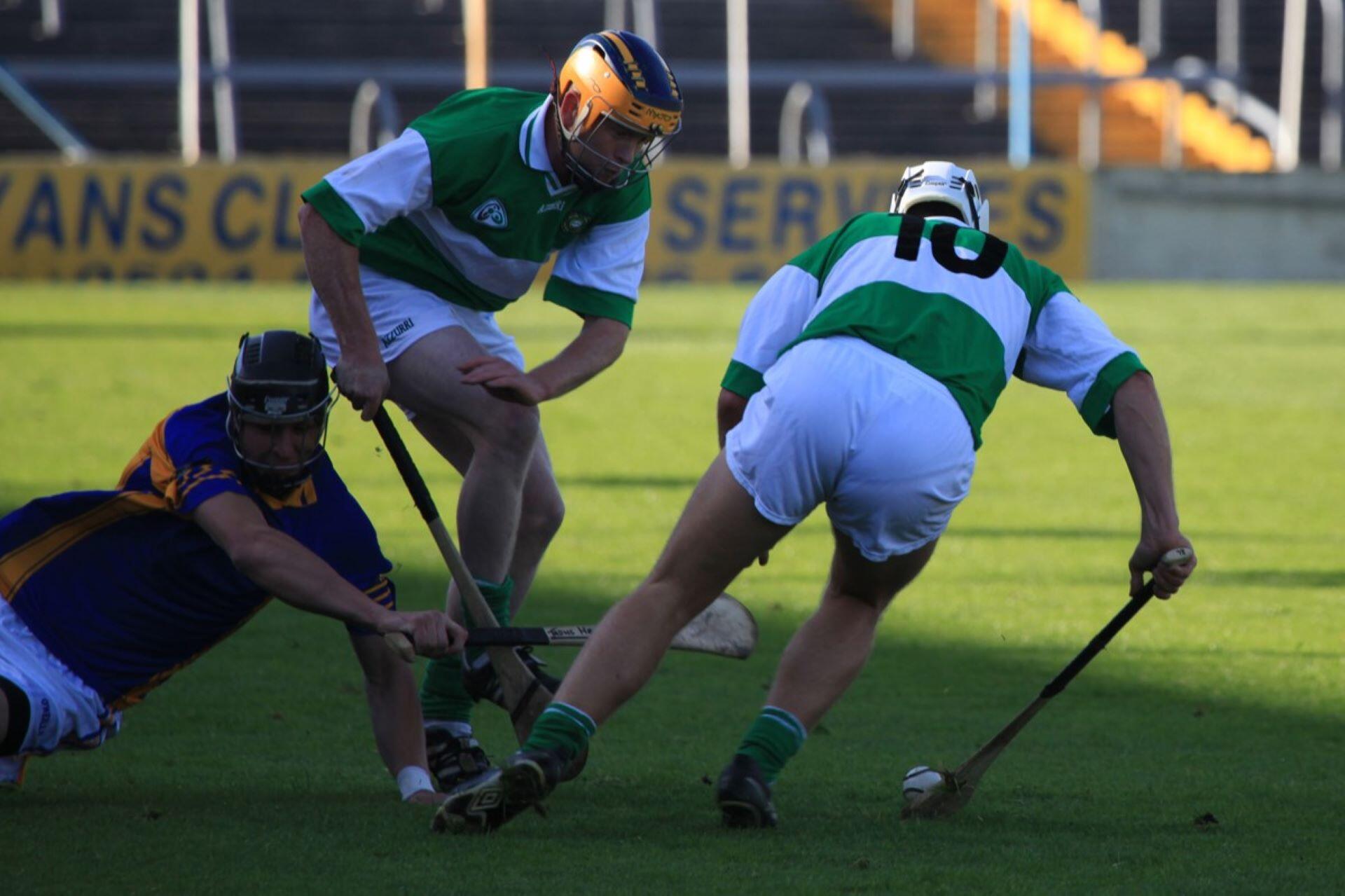
Three helmeted hurling players contest a sliotar on the grass with their hurleys.
Players use the hurley to strike, control and move the sliotar during fast changes of possession. | Image by Irish Defence Forces from Ireland. Creative Commons Attribution 2.0 Generic license.
Each senior hurling team fields
15

players, including one goalkeeper and 14 outfield players.⁸

Equipment Used

Hurley: The wooden stick used to control, pass and strike the sliotar. Adult hurleys are available in approved lengths from 30 to 36 inches, with a maximum bás width of 17 centimetres.⁷
Sliotar: A small leather-covered ball designed for fast striking and catching.
Protection: Players wear helmets with facial guards, while goalkeepers may use additional protective equipment.

Field and Team Composition

Goalkeeper: Protects the goal and begins many attacking moves.
Outfield lines: Defenders, midfielders and forwards occupy broadly defined areas.
Movement: Players frequently leave their nominal positions as possession changes.

AspectOfficial rule or measurementWhat it means for beginners
Players per team15One goalkeeper and 14 outfield players
Point1 pointThe sliotar passes between the uprights and over the crossbar
Goal3 pointsThe sliotar passes between the posts and under the crossbar into the net
Pitch dimensions130–145 m long by 80–90 m wideA hurling pitch is larger than many other field-sport pitches
Goal dimensionsPosts 6.5 m apart; crossbar 2.5 m highThe same posts are used to score both goals and points
Senior inter-county match duration70 minutesTwo 35-minute halves, plus added time
Other official match duration60 minutesTwo 30-minute halves, unless competition rules specify otherwise
Sliotar69–72 mm diameter; 110–116 gThe small ball struck, carried and passed with the hurley
Adult hurleyApproved categories from 30–36 inches; maximum bás width of 17 cmThe correct length depends on the individual player
Helmet requirementApproved helmet with facial guard requiredMandatory during both matches and practice sessions

The Rich History of Hurling

Hurling's history dates back to early Irish tradition. The game has changed a lot over the centuries as it became an organised and codified game with top players. Its survival is down to the communities that continued to teach and play it.

Ancient Origins

Early tradition: The GAA traces versions of hurling back thousands of years through Irish stories, customs and historical accounts.⁶
Law and literature: Early Irish legal and literary sources describe stick-and-ball games played by different communities.
Mythology: Tales involving Cú Chulainn helped establish hurling as a symbol of courage, skill and youthful achievement.

Evolution Through the Centuries

Regional games: Earlier forms varied in their equipment, team sizes and rules, with communities developing distinct local traditions.
Dublin revival: The Dublin Hurling Club adopted formal rules in 1883, helping create a more consistent version of the sport.¹
GAA standardisation: After its foundation in 1884, the GAA developed common rules and organised competitions across Ireland.³

Hurling in Modern Times

Major competition: The All-Ireland Senior Hurling Championship remains the leading inter-county tournament in the sport.
Club structure: Local clubs continue to develop players and organise competition at community, county and provincial levels.
Cultural recognition: UNESCO added hurling to its Representative List of the Intangible Cultural Heritage of Humanity in 2018.¹⁰
The best Fitness tutors available
Ger
5
5 (4 reviews)
Ger
€15
/h
Gift icon
1st lesson free!
Kate
5
5 (3 reviews)
Kate
€25
/h
Gift icon
1st lesson free!
Camilla
5
5 (1 reviews)
Camilla
€25
/h
Gift icon
1st lesson free!
Joe
5
5 (2 reviews)
Joe
€40
/h
Gift icon
1st lesson free!
Antonio
5
5 (4 reviews)
Antonio
€40
/h
Gift icon
1st lesson free!
Nicolaz
5
5 (3 reviews)
Nicolaz
€40
/h
Gift icon
1st lesson free!
Kate
Kate
€15
/h
Gift icon
1st lesson free!
Barbora
5
5 (1 reviews)
Barbora
€50
/h
Gift icon
1st lesson free!
Ger
5
5 (4 reviews)
Ger
€15
/h
Gift icon
1st lesson free!
Kate
5
5 (3 reviews)
Kate
€25
/h
Gift icon
1st lesson free!
Camilla
5
5 (1 reviews)
Camilla
€25
/h
Gift icon
1st lesson free!
Joe
5
5 (2 reviews)
Joe
€40
/h
Gift icon
1st lesson free!
Antonio
5
5 (4 reviews)
Antonio
€40
/h
Gift icon
1st lesson free!
Nicolaz
5
5 (3 reviews)
Nicolaz
€40
/h
Gift icon
1st lesson free!
Kate
Kate
€15
/h
Gift icon
1st lesson free!
Barbora
5
5 (1 reviews)
Barbora
€50
/h
Gift icon
1st lesson free!
Let's go

When Was Hurling Invented?

The exact date hurling was invented remains unknown. After all, there were older stick-and-ball traditions. However, there's a mythological explanation, too.

date_range
Hurling Has No Single Invention Date

Hurling was not created on one identifiable date. Stories and records show that forms of the game existed long before its modern rules were established.⁶ The Dublin Hurling Club adopted a formal set of rules in 1883, while the GAA was founded the following year and subsequently standardised the sport.¹ Modern hurling therefore combines an ancient Irish tradition with rules developed during the late nineteenth century.³

Mythological References

Cú Chulainn: The Ulster Cycle describes the young hero displaying exceptional skill with a hurley and ball.
Ancient settings: Traditional stories place hurling-like games in Ireland thousands of years ago.⁶
Cultural meaning: These tales connect the sport with courage, strength, skill and Irish identity.

Historical Evidence

Early records: Irish legal and literary sources indicate that organised stick-and-ball games existed centuries ago.
Surviving equipment: Preserved hair sliotars illustrate how earlier balls were made before modern standardisation.⁹
Modern rules: Nineteenth-century codification transformed varied local games into the organised sport played today.

Hurling's Cultural Significance in Ireland

Hurling is more than a sport in Ireland. Thanks to hurling, counties, parishes, and families can share tradition. Local clubs offer a space for players, coaches, volunteers, and supporters to build community ties. In fact, hurling is so important and culturally significant in Ireland that UNESCO recognised its cultural importance in 2018.¹⁰

Here's hurling explained for UNESCO.

A Symbol of Irish Identity

Living heritage: Hurling links modern players with traditions preserved across generations.
County pride: Inter-county competitions give supporters a strong sense of local identity and belonging.
Cultural recognition: UNESCO describes the sport as an important part of Ireland’s intangible cultural heritage.¹⁰

Community and Social Aspects

Local clubs: GAA clubs organise training, matches and social activities throughout Ireland.
Volunteer support: Coaches, officials and committee members help sustain the sport at grassroots level.
Shared participation: Families often support the same club across several generations, strengthening community connections.

Hurling in the Global Arena

Overseas clubs: Irish emigrants established hurling teams across Europe, North America, Asia and Australasia.
New participants: International clubs increasingly introduce the game to players without Irish backgrounds.
Global competition: Events such as the GAA World Games bring overseas hurling teams together.²
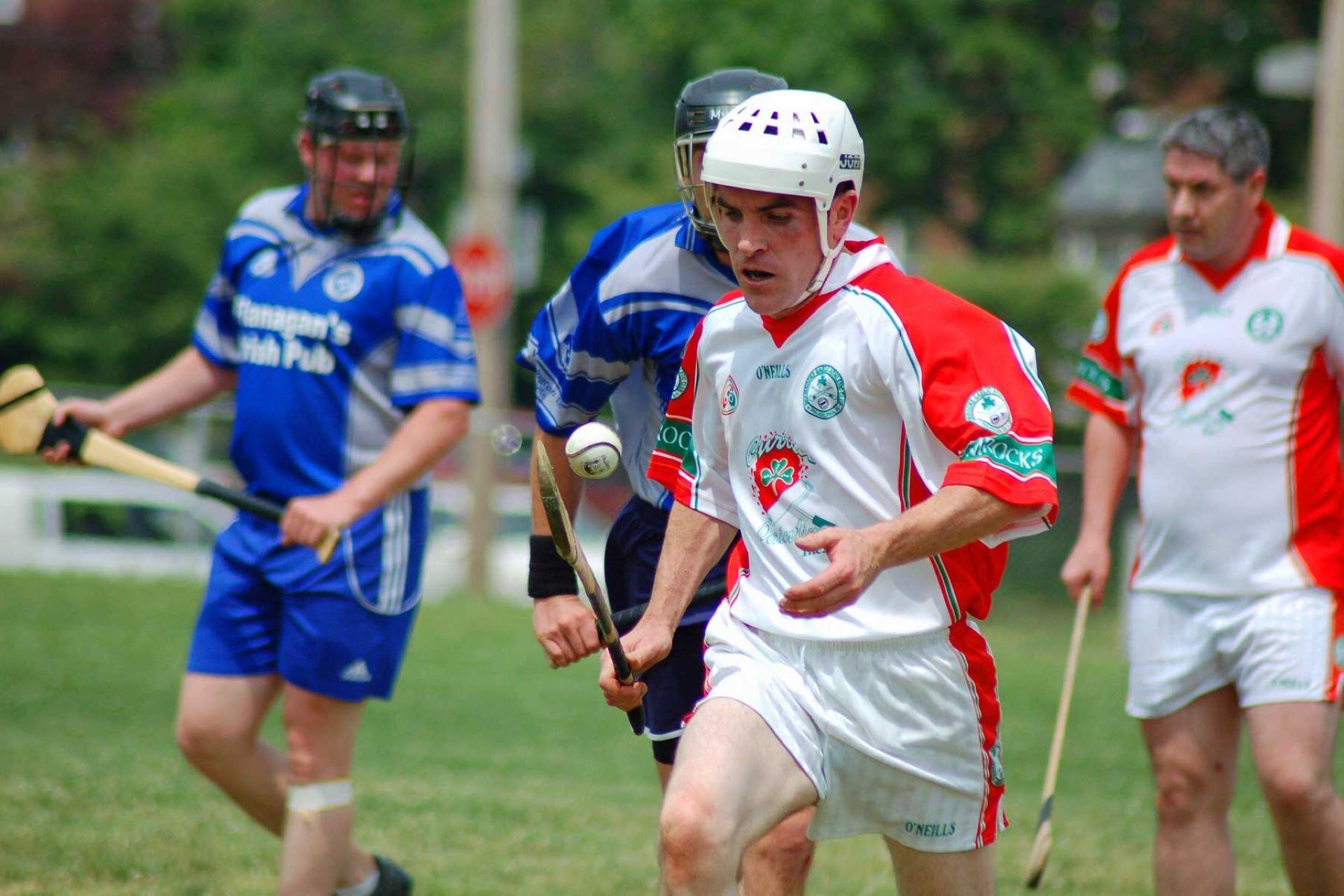
Helmeted hurling player in a white and red kit runs with a sliotar beside players in blue.
Hurling clubs outside Ireland introduce the sport to new players and connect Irish communities abroad. | Image by Jeff Meade from Philadelphia, US. Creative Commons Attribution 2.0 Generic license.

How to Experience Hurling Today

There are a few ways for you to experience hurling. You could watch it online, attend a match, or even consider playing it. Local clubs are a gateway to support, and you'll find resources for getting involved through the GAA's official channels, as well as information on how it's played, match length, etc.

beenhere
Helmets Are Mandatory

Every player must wear an approved helmet with a facial guard during hurling matches and practice sessions.⁸ The helmet should fit securely and must not be modified from its manufactured form. Beginners can ask a local club or coach for help choosing suitable protective equipment before taking part.

Attending Matches
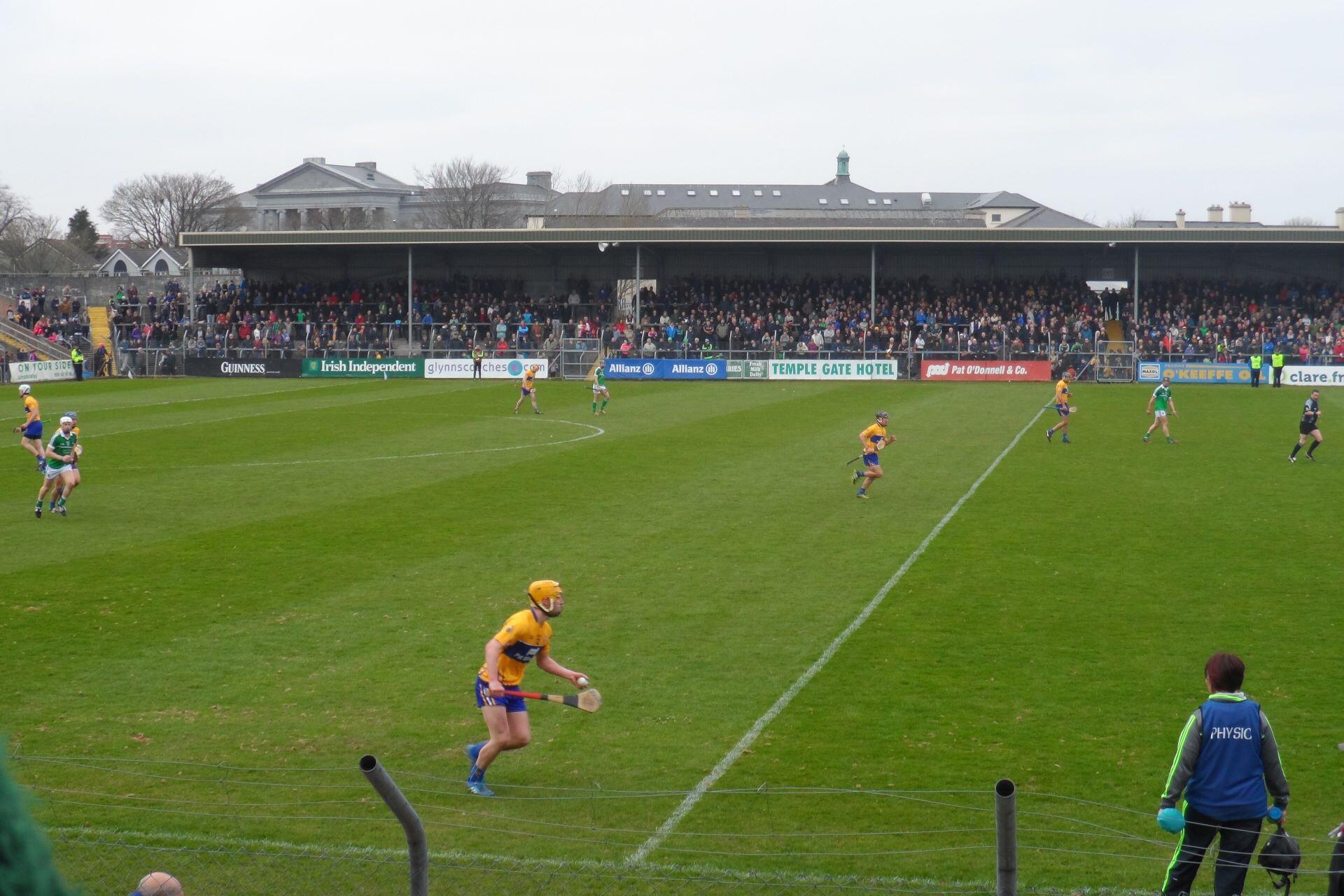
Local fixtures: Club matches offer an accessible introduction to live hurling.
Inter-county games: Championship matches feature Ireland’s leading county teams.
Planning ahead: Check official fixtures for dates, venues and ticket information.
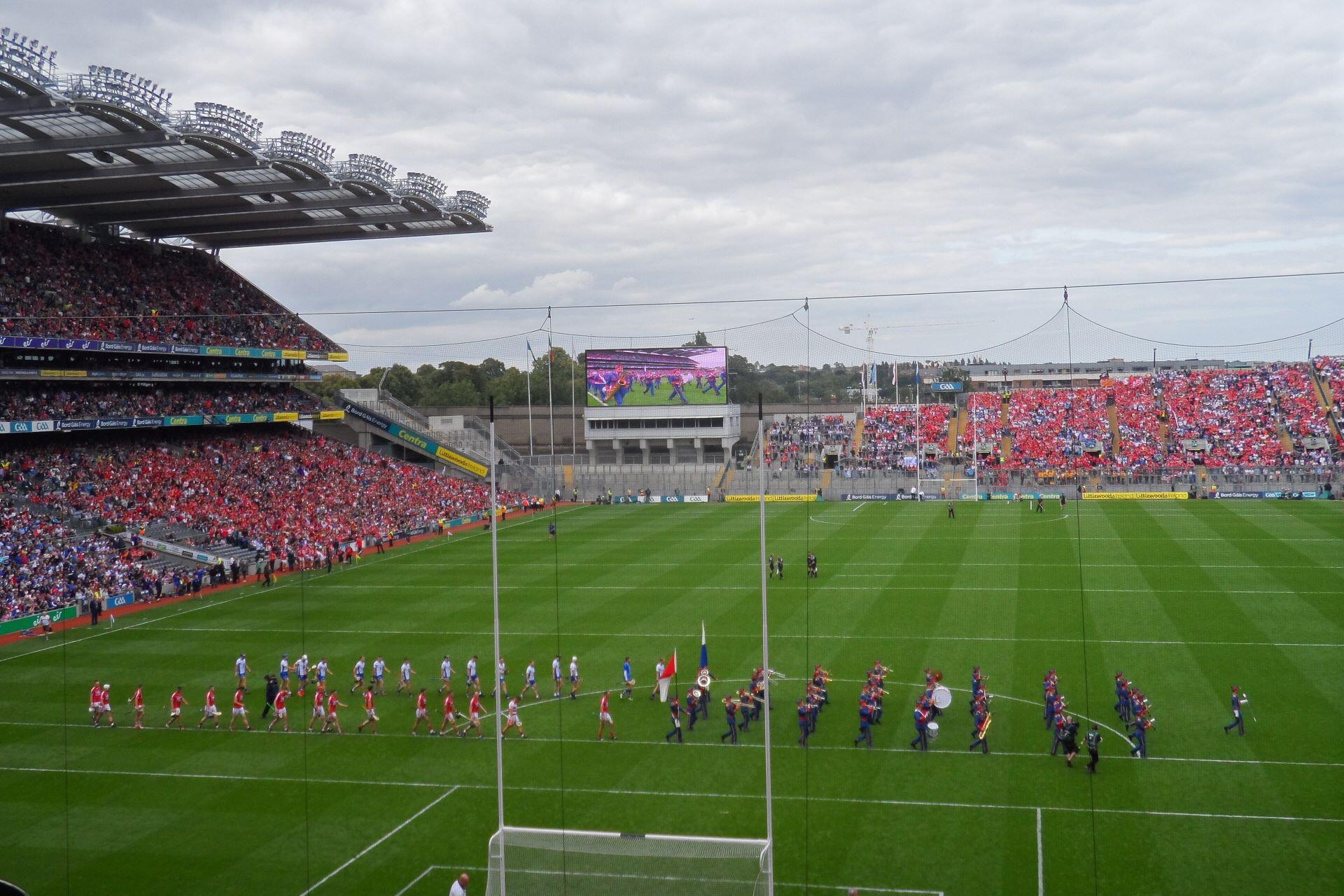
Hurling players in yellow-and-blue and green-and-white kits compete on a grass pitch in front of a crowded stand.
Club and inter-county matches give spectators an accessible way to experience the speed and atmosphere of hurling. | Image by Sheila1988. Creative Commons Attribution-Share Alike 4.0 International license.
A senior inter-county hurling match contains
70

minutes of normal playing time across two halves.⁸

Learning to Play
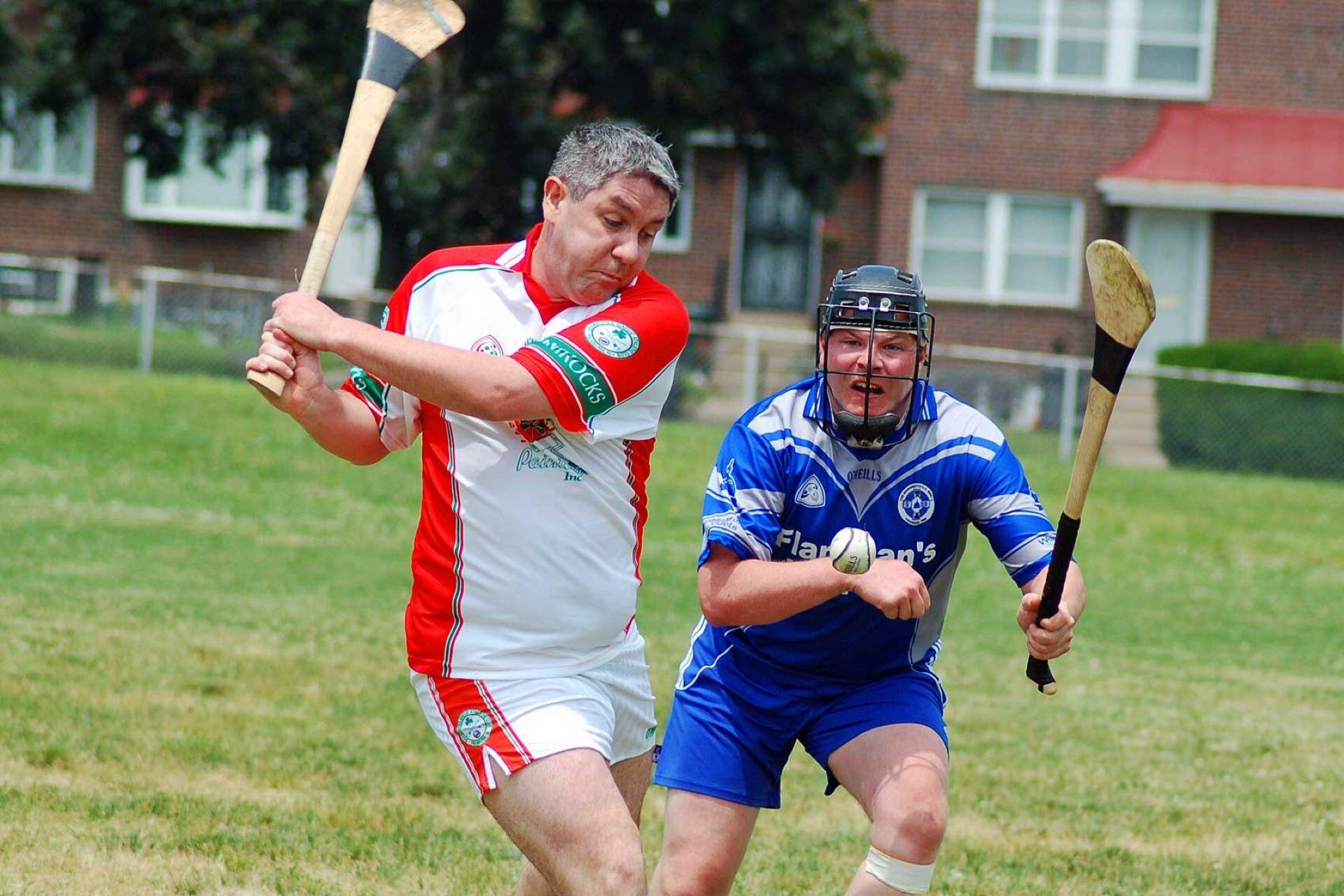
Find a club: The GAA provides information for locating nearby clubs.⁵
Beginner sessions: Clubs may offer introductory coaching for different ages.
Borrow equipment: Ask whether helmets and hurleys are available before buying.
Two hurling players in red-and-white and blue kits compete as one swings a hurley.
Beginners can experience hurling through local clubs, where coaching introduces striking, movement and safe play. | Image by Jeff Meade. Creative Commons Attribution 2.0 Generic license.

Watching Hurling Online

GAA+: The official service streams selected matches and offers season packages.⁴
Broadcaster listings: Coverage varies by competition and location.
Fixture pages: Check each match listing to confirm its television or streaming options.

Of course, if you'd like to learn more about hurling, look to tutors or coaches on Superprof. With most offering the first session for free, you can always try a few out first. Just search "hurling" on the Superprof site today!

References

  1. Dublin City Council. “How Dublin Saved Hurling.” 29 Oct. 2014, https://www.dublincity.ie/library/blog/how-dublin-saved-hurling. Accessed 13 Jul. 2026.
  2. Gaelic Athletic Association. “2026 oneills.com GAA World Games Teams.” https://www.gaa.ie/worldgames/teams. Accessed 13 Jul. 2026.
  3. Gaelic Athletic Association. “The Foundation of the GAA.” https://www.gaa.ie/the-gaa/history. Accessed 13 Jul. 2026.
  4. Gaelic Athletic Association. “GAA+ Launches 2026 Season Pass.” 24 Mar. 2026, https://www.gaa.ie/article/gaa-launches-2026-season-pass. Accessed 13 Jul. 2026.
  5. Gaelic Athletic Association. “Getting Involved.” https://www.gaa.ie/my-gaa/getting-involved. Accessed 13 Jul. 2026.
  6. Gaelic Athletic Association. “Hurling: History and Evolution.” https://www.gaa.ie/my-gaa/getting-involved/hurling-history-and-evolution. Accessed 13 Jul. 2026.
  7. Gaelic Athletic Association. “Hurley Dimensions Approved by Central Council.” 23 May 2023, https://www.gaa.ie/article/hurley-dimensions-approved-by-central-council. Accessed 13 Jul. 2026.
  8. Gaelic Athletic Association. Official Guide: Part 2. 15 Apr. 2026, https://www.gaa.ie/api/images/image/upload/t_q-best/prd/xi4oyuttzqpaqr2vfhbn.pdf. Accessed 13 Jul. 2026.
  9. National Museum of Ireland. “Hair Hurling Ball or Sliotar and Camán, Gallery 1: Curator’s Choice.” https://www.museum.ie/en-IE/Museums/Decorative-Arts-History/Engage-And-Learn/Schools-Educational-Visits/Learning-Resources-%281%29/Virtual-Trail-Game%2C-Set%2C-Match-The-History-of-Spor/Hair-hurling-ball-or-sliotar-and-Caman%2C-Gallery-1. Accessed 13 Jul. 2026.
  10. UNESCO. “Hurling.” Intangible Cultural Heritage, https://ich.unesco.org/en/RL/hurling-01263. Accessed 13 Jul. 2026.

Summarise with AI:

Did you like this article? Leave a rating!

5.00 (1 rating(s))
Loading...

Joseph P

Joseph is a French and Spanish to English translator, copywriter, and all-round language enthusiast.