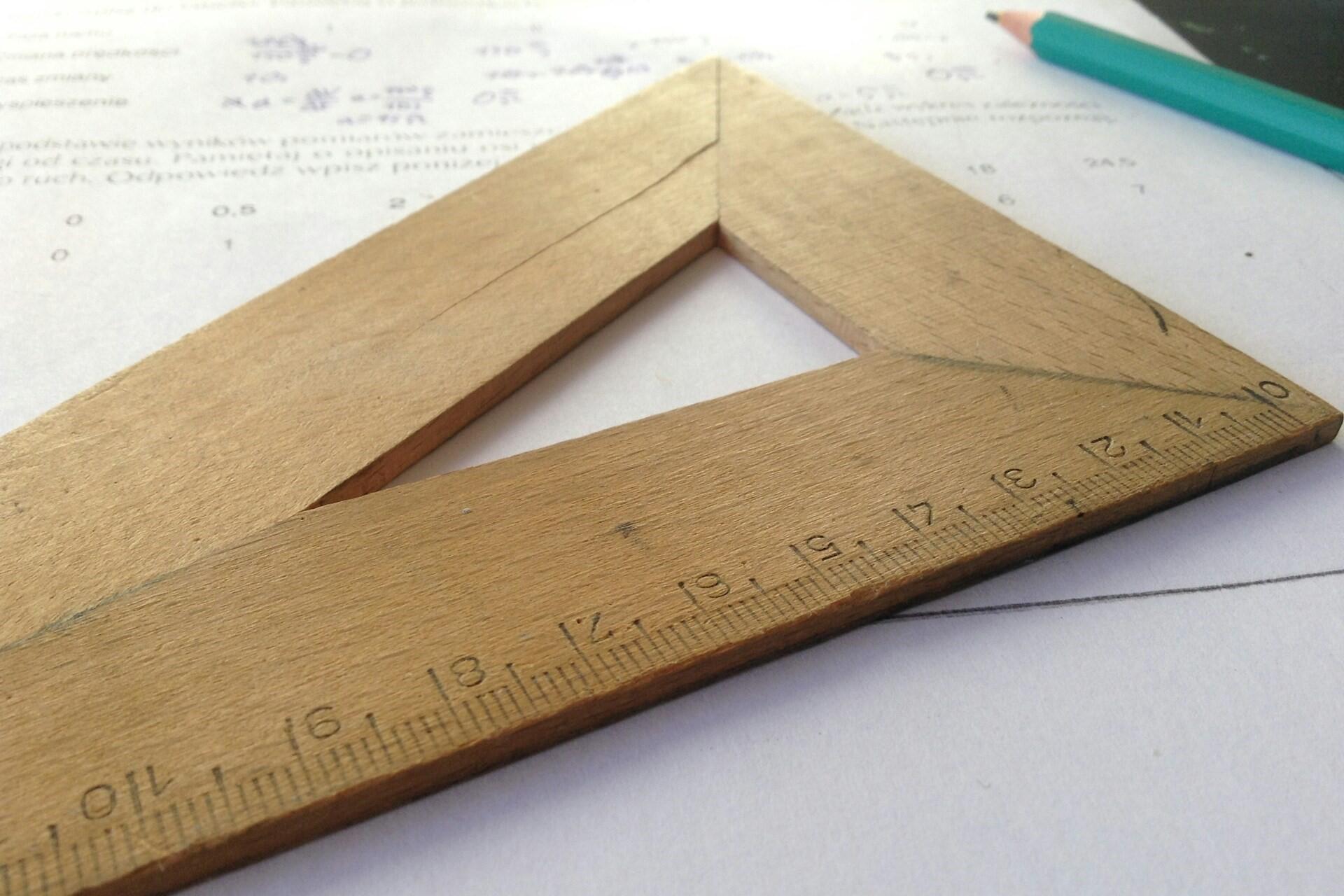

Maths is an incredibly useful subject at school, but it won't feel useful if you find it difficult. From budgeting and cooking to programming, engineering, science, business, trades and everyday problem-solving, maths supports learning, work and everyday life.³ However, so many learners struggle for several reasons. If you feel maths isn't for you or would like to get better at it, here's our guide to making it easier with actionable tips and advice.
Key Takeaways
- Maths gets easier when learners build on secure foundations rather than jumping straight into advanced topics.
- Mistakes are useful because they show which step, rule or concept needs more practice.
- Short, regular study sessions are usually more effective than long, unfocused revision sessions.
- Online tools, maths games, videos and practice platforms work best when learners still solve questions themselves.
- Asking for help is part of successful self-study, especially when the same topic keeps causing problems.


Developing a Positive Mathematical Mindset
Before you can teach yourself maths, you need to work out what's making it difficult for you. Firstly, confidence doesn't mean that you'll find every question easy, but it'll help you stay calm enough to approach it to the best of your ability. This is the easiest gain for most learners, especially given that Irish students outperformed the OECD average in mathematics on PISA 2022.⁹
reached at least Level 2 proficiency in mathematics in PISA 2022.⁴

Make your maths routine healthy. Don't beat yourself up about your ability in maths, remembering that it won't make you any better at it. Once you have a better approach to the subject in general, you can start working on improving your mathematical technique and understanding.
A wrong answer is not proof that someone is “bad at maths”. It is usually evidence that one step, definition or assumption needs checking. Learners should keep a mistake log and rewrite the correct method beside the original attempt.
Embracing a Growth Mindset
- Focus on progress, not instant success.
- Revisit hard topics without rushing.
- Measure improvement against earlier attempts.
Overcoming Maths Anxiety
- Begin with familiar question types.
- Use calm breathing before timed work.
- Break each problem into smaller steps.
Building Strong Foundations
The more you understand when you start tackling a maths question, the easier it'll all be. Don't aim to master everything at once. Instead, start with the most basic maths skills and aim to master them. Once they're second nature, you'll make learning maths easier.
Algebra, geometry, trigonometry and calculus all become easier when arithmetic, fractions, percentages, negative numbers and equations are secure. A learner who feels stuck at a higher level often needs to revisit an earlier concept rather than blindly push through harder problems.
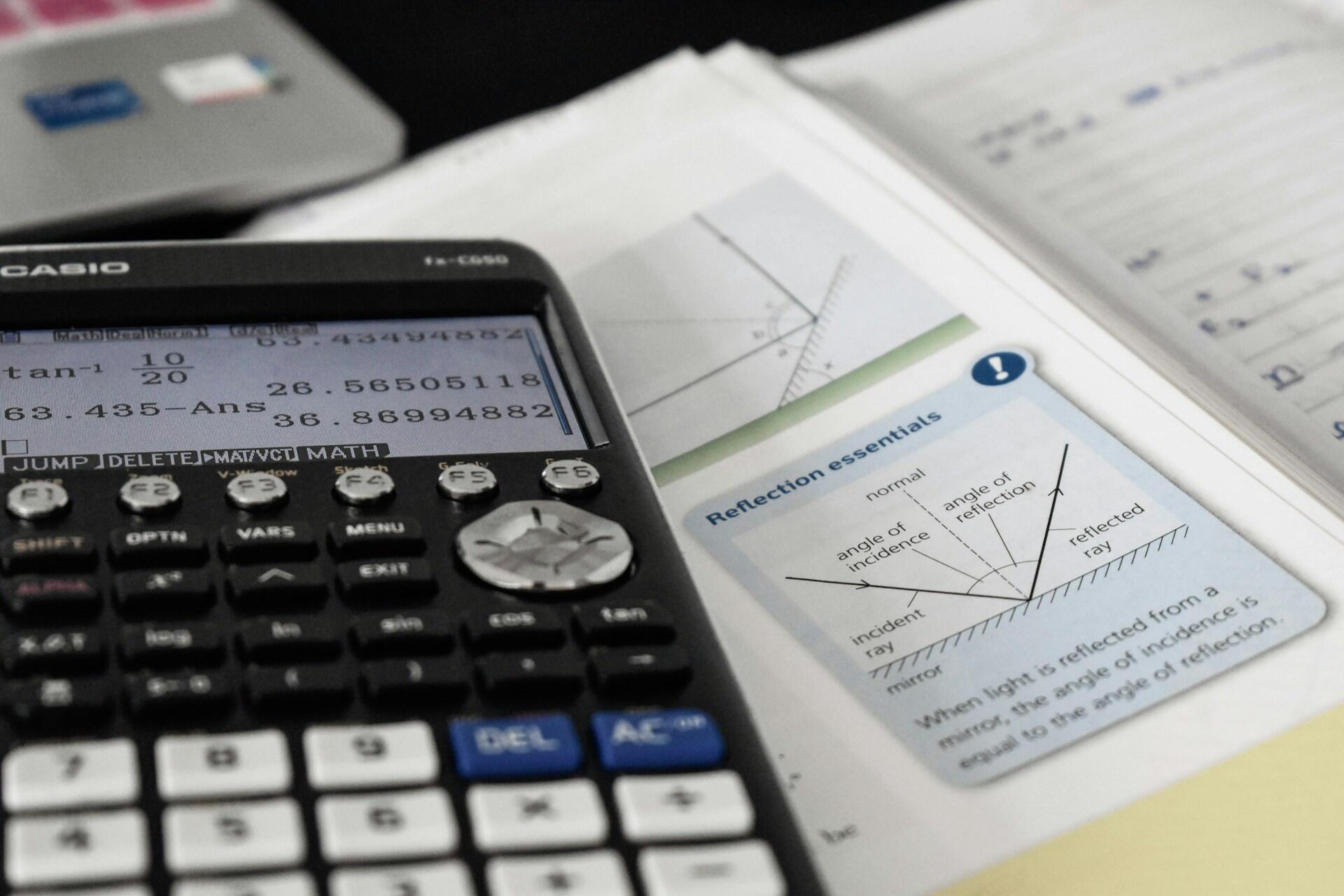
Mastering Basic Concepts
- Practise number skills regularly.
- Check fractions, decimals and percentages.
- Learn the reason behind each rule.
Sequential Learning Approach
- Start with arithmetic and number work.
- Build towards algebra and graphs.
- Add advanced topics once ready.
Effective Study Techniques
Does it feel like you're constantly studying and getting nowhere? This is often a problem for most students across various subjects. It's about working smarter, not harder, especially when the law of diminishing returns starts affecting longer study sessions.
Active Problem Solving
- Attempt questions before reading solutions.
- Write each step clearly.
- Retry errors from a blank page.
Spaced Repetition
- Review new topics the next day.
- Revisit them again after a week.
- Mix older questions into practice sessions.
additional months’ progress.⁵
Using Multiple Resources
- Use textbooks for clear sequences.
- Watch videos for visual explanations.
- Practise with online exercises.
| Tip | How to Use It | Best For |
|---|---|---|
| Keep a mistake log | Write down wrong answers, the step where the error happened, and the corrected method. Review the log before each new study session. | Spotting repeated mistakes in algebra, fractions, signs and formula use |
| Build a formula sheet | Create one page of key formulas with one short example beside each, using LaTeX-style notation where useful, such as x = (-b ± sqrt(b^2-4ac))/(2a). | Geometry, trigonometry, algebra and exam revision |
| Use spaced repetition | Review each topic after one day, one week and one month instead of cramming everything into one long session. | Remembering methods, theorems, definitions and common problem types |
| Practise without the solution first | Attempt each problem fully before checking the answer. If you get stuck, write what you know and try a simpler example first. | Building independence and active problem-solving skills |
| Explain the method aloud | Talk through each step as if you were teaching someone else. This makes gaps in understanding easier to notice. | Checking whether you truly understand a method |
| Draw diagrams | Sketch number lines, graphs, triangles, functions or word problems before calculating. Label values clearly before solving. | Visual learners, geometry, functions and real-world problems |
| Follow a topic checklist | Break maths into small topics, such as fractions, equations, functions, geometry and calculus. Tick each one only when you can solve problems unaided. | Structured self-study and finding weak areas |
| Use timed practice carefully | First practise slowly for accuracy, then use short timed sessions once the method feels familiar. | Exam preparation and improving confidence under pressure |
| Watch one video, then practise | Use videos to understand the idea, but follow them with written problems. Avoid watching several tutorials without solving anything yourself. | Learning new topics online without becoming passive |
| Book a tutor check-in | Use a short session with a teacher or tutor to review mistakes, unblock difficult topics and choose the next steps for independent study. | Learners who are self-studying but getting stuck repeatedly |
Practical Application of Maths Skills
So many students ask themselves when they'll use half of the maths they learn in school. While some problems feel abstract and disconnected from everyday life, tasks like budgeting, measuring, reading graphs, and estimating totals all require mathematical thinking. Find ways to integrate maths into your daily life, even if through maths games, and it'll help you feel more willing to study and learn.
Real-World Problem Solving
- Estimate costs before using a calculator.
- Read charts, graphs and timetables.
- Apply percentages to everyday situations.
Engaging in Maths-Related Activities
- Try Sudoku, chess or logic puzzles.
- Use maths games for quick practice.
- Work through problems with others.
Seeking Support and Feedback
Still lost? It might be worth getting help with your maths. A second perspective might be just what you needed. Study groups, educators, and tutors might be able to see solutions where you can't, but more on that last point a bit later.
Self-study does not mean never asking anyone for support. A teacher, study group, classmate, or private tutor can help identify the exact point at which a method breaks down. Even one focused session can make independent study easier afterwards.
Joining Study Groups
- Choose focused study partners.
- Compare methods after solving questions.
- Explain one topic to someone else.
Consulting Educators and Tutors
- Bring exact questions or examples.
- Ask about one topic at a time.
- Turn feedback into next steps.
Maintaining Consistency and Motivation
As with any skill or subject, consistency pays dividends with progress. Long study sessions may feel like you're doing a lot, but short and regular sessions are always more effective. Set clear goals for yourself and work towards them progressively.

Setting Achievable Goals
- Choose one topic per session.
- Set a weekly practice target.
- Track questions you can now solve.
Celebrating Milestones
- Tick off completed topics.
- Save examples of improved work.
- Reward effort after steady practice.
Leveraging Technology in Maths Learning
There are lots of options out there to help you, and students now have more technology and resources than ever to help them study maths. The great thing is that you can find what works for you. We won't list them all, but start your search with a few of these examples.
Educational Apps and Platforms
- Use Scoilnet for Irish curriculum-linked maths resources.¹⁰
- Use NRICH for problem-solving activities and deeper thinking.⁸
Online Communities and Forums
- Use Mathematics Stack Exchange for detailed maths questions.
- Try NRICH student activities for guided problem-solving tasks.
- Use Maths Week Ireland resources for events, puzzles and activities.⁷
Overcoming Common Challenges
Everybody will eventually find a topic that's slow, abstract, or frustrating. This doesn't mean that maths is beyond you, but it may be worthwhile looking at changing something if you hit a roadblock. Time management, smaller goals and well-timed support can help learners keep going when progress feels uneven.
Time Management
- Study in short planned blocks.
- Keep a regular weekly maths slot.
- Stop before tiredness causes mistakes.
Staying Motivated During Difficult Topics
- Start with an easier example.
- Connect the topic to a real use.
- Ask for help before stopping.
Remember that just because you can teach yourself maths, that doesn't mean you have to do it on your own. On Superprof, there are private maths tutors all over Ireland and around the world who can help you. Whether you want to improve your maths skills with a face-to-face tutor or prefer the convenience of online tutoring at whatever time you need it, you can browse tutors' profiles simply by searching for "maths" on the website.
Even better, most private tutors on the Superprof platform offer the first session for free. Try a few tutors out to see which would be the best fit for you and what and how you'd like to learn. Good luck!
References
- Cambridge Mathematics. “How Does Maths Anxiety Affect Mathematics Learning?” Cambridge Mathematics Espresso, May 2017, https://www.cambridgemaths.org/Images/espresso_6_maths_anxiety.pdf. Accessed 25 Jun. 2026.
- Curriculum Online. “Mathematics.” Junior Cycle Mathematics, National Council for Curriculum and Assessment, https://www.curriculumonline.ie/junior-cycle/junior-cycle-subjects/mathematics/. Accessed 25 Jun. 2026.
- Curriculum Online. “Mathematics.” Senior Cycle Mathematics, National Council for Curriculum and Assessment, https://curriculumonline.ie/senior-cycle/senior-cycle-subjects/mathematics/. Accessed 25 Jun. 2026.
- Department of Education and Youth. “Performance of Students in Ireland in PISA 2022.” Gov.ie, 5 Dec. 2023, https://www.gov.ie/en/department-of-education/publications/performance-of-students-in-ireland-in-pisa-2022/. Accessed 25 Jun. 2026.
- Education Endowment Foundation. “Metacognition and Self-Regulation.” Teaching and Learning Toolkit, https://educationendowmentfoundation.org.uk/education-evidence/teaching-learning-toolkit/metacognition-and-self-regulation. Accessed 25 Jun. 2026.
- Maths Week Ireland. “Resources.” Maths Week Ireland, https://www.mathsweek.ie/2025/00resources/. Accessed 25 Jun. 2026.
- NRICH. “Enriching Mathematics for All Learners.” NRICH, University of Cambridge, https://nrich.maths.org/home. Accessed 25 Jun. 2026.
- OECD. “Ireland: Student Performance, PISA 2022.” Education GPS, https://gpseducation.oecd.org/CountryProfile?primaryCountry=IRL&topic=PI&treshold=10. Accessed 25 Jun. 2026.
- Oide Technology in Education. “Scoilnet.ie.” Oide Technology in Education, https://www.oidetechnologyineducation.ie/projects-initiatives/scoilnet/. Accessed 25 Jun. 2026.
Summarise with AI:
Did you like this article? Leave a rating!

 Loading...