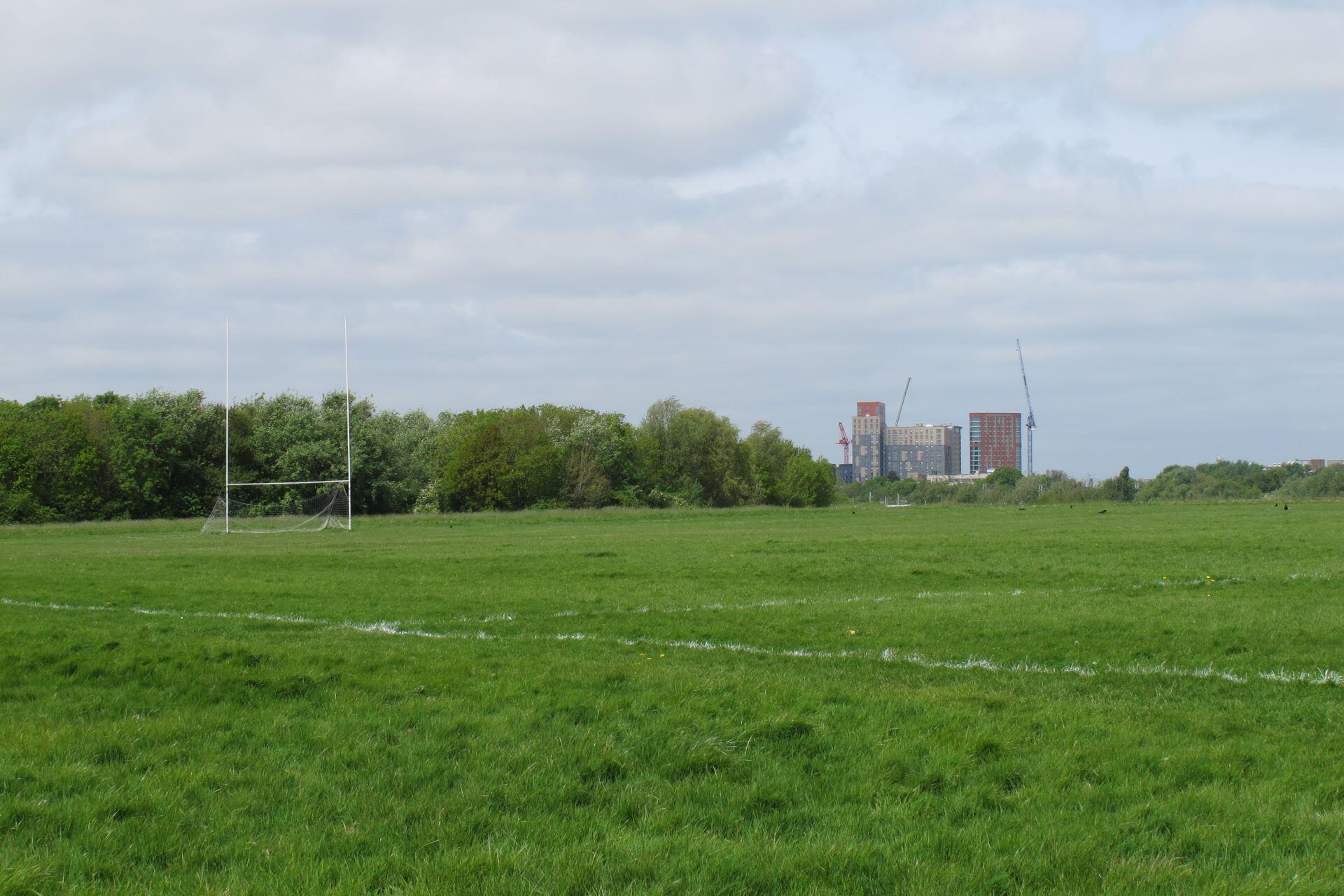

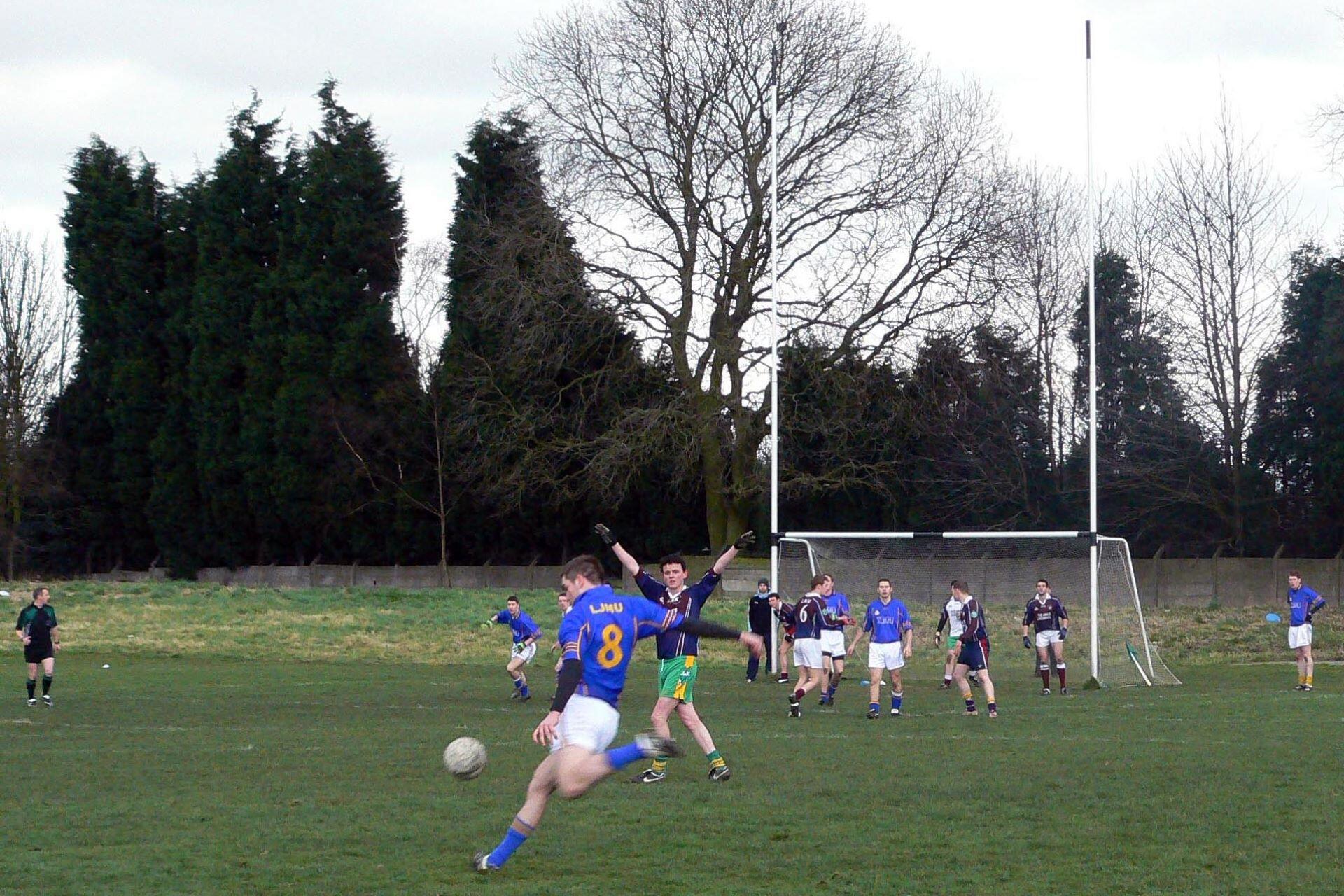
How long is a GAA match? How long is a GAA pitch, for that matter? Gaelic football and hurling are among the principal games organised by the GAA.⁸ Here, we'll cover both the match length and pitch dimensions and how they compare to other sports.
Key Takeaways
- A regulation adult GAA pitch measures 130–145 metres long and 80–90 metres wide.⁷
- At its maximum dimensions, a GAA pitch covers 13,050 square metres.
- International soccer and rugby fields are generally narrower than regulation GAA pitches.⁹
- Most Gaelic football matches last 60 minutes, while senior inter-county games contain 70 minutes of normal playing time.⁷
- Gaelic football has older traditional roots, but modern soccer was formally codified before the modern GAA game.²


Detailed GAA Pitch Dimensions
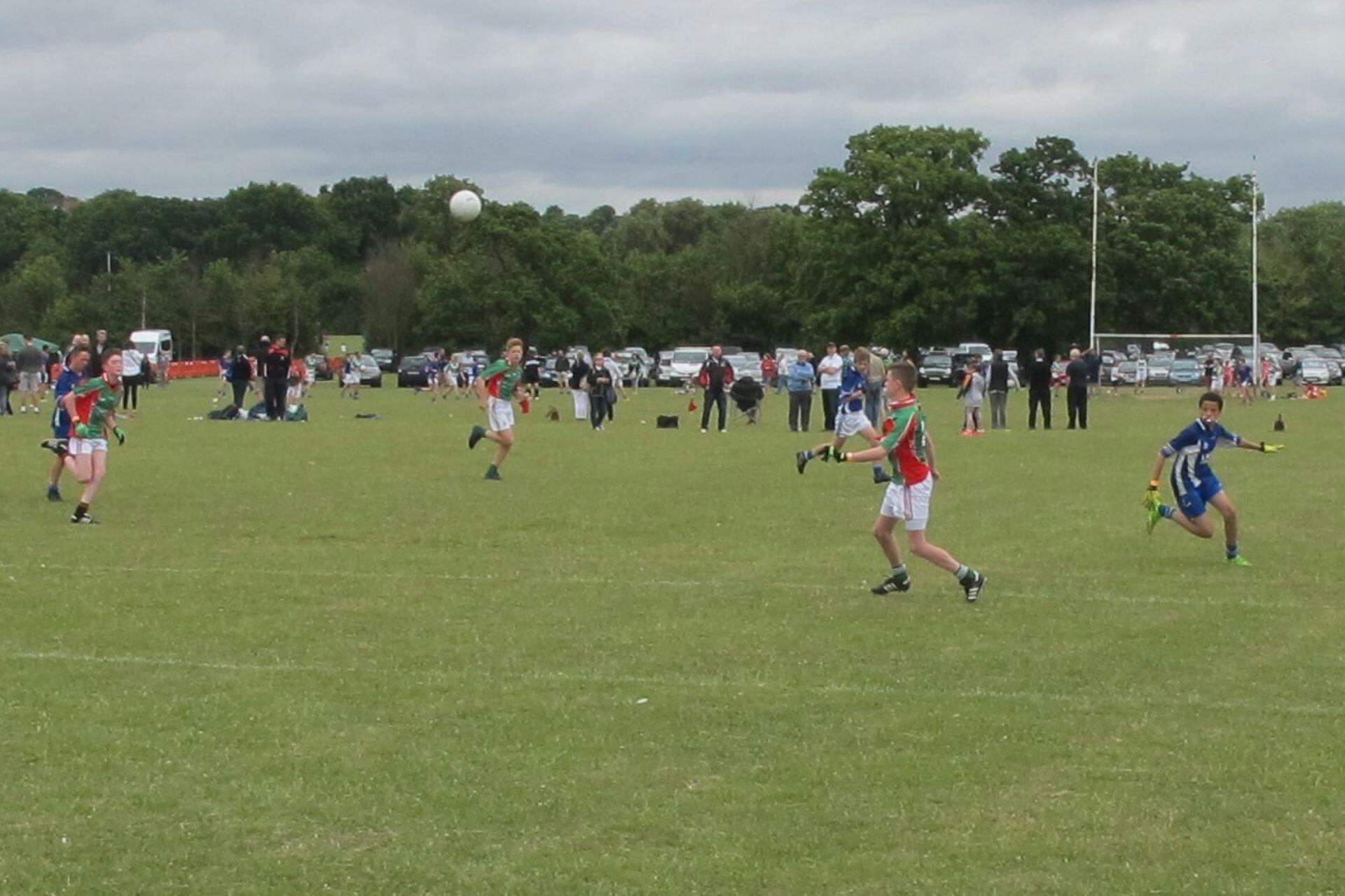
A GAA pitch is bigger than a lot of other sports. However, the dimensions aren't universally identical. The rules specify minimum and maximum measurements rather than a single compulsory size. This is actually helpful for some clubs and counties as they can work within the available space while maintaining a regulation playing area.
metres from endline to endline.⁷
Length and Width Specifications
Markings and Zones
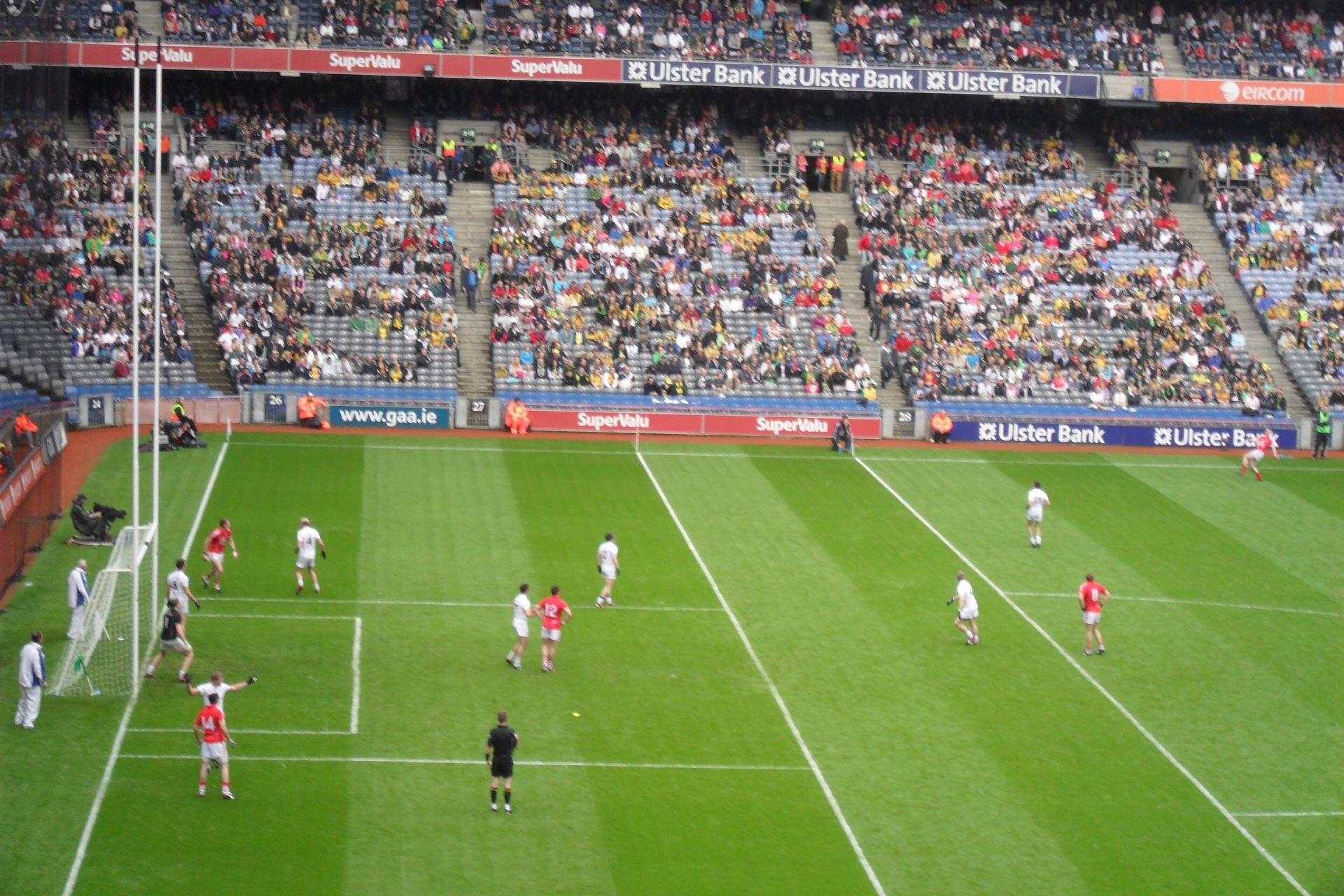
A regulation adult GAA pitch may measure anywhere from 130 to 145 metres long and 80 to 90 metres wide.⁷ This means two fully compliant grounds can differ noticeably in both dimensions and total playing area. Local rules may also permit smaller pitches for younger age groups where the full adult dimensions are unsuitable.⁷
Comparing GAA Pitch to Other Sports Fields
GAA pitches are usually bigger than soccer and rugby pitches. The most notable difference between the two is the width. This is why there are often longer runs, greater kicking distances and more space between players in different positions.
GAA vs Soccer Pitches
GAA Pitch
- Length: 130–145 metres
- Width: 80–90 metres
- Maximum area: 13,050 square metres
- Playing effect: More space for long kicks, wide attacks and extended runs.⁷
International Soccer Pitch
- Length: 100–110 metres
- Width: 64–75 metres
- Maximum area: 8,250 square metres
- Playing effect: A more compact surface with shorter distances between players.⁹
GAA vs Rugby Fields
GAA Pitch
- Length: 130–145 metres
- Width: 80–90 metres
- Boundary: The endlines mark the full playing length.
- Playing effect: Considerably more width for lateral movement and passing.⁷
Rugby Field
- Field-of-play length: 94–100 metres
- Width: 68–70 metres
- Boundary: In-goal areas extend beyond each goal line.
- Playing effect: Narrower than a GAA pitch, although the complete enclosure can approach a similar overall length.¹⁰
Duration of a Gaelic Football Match
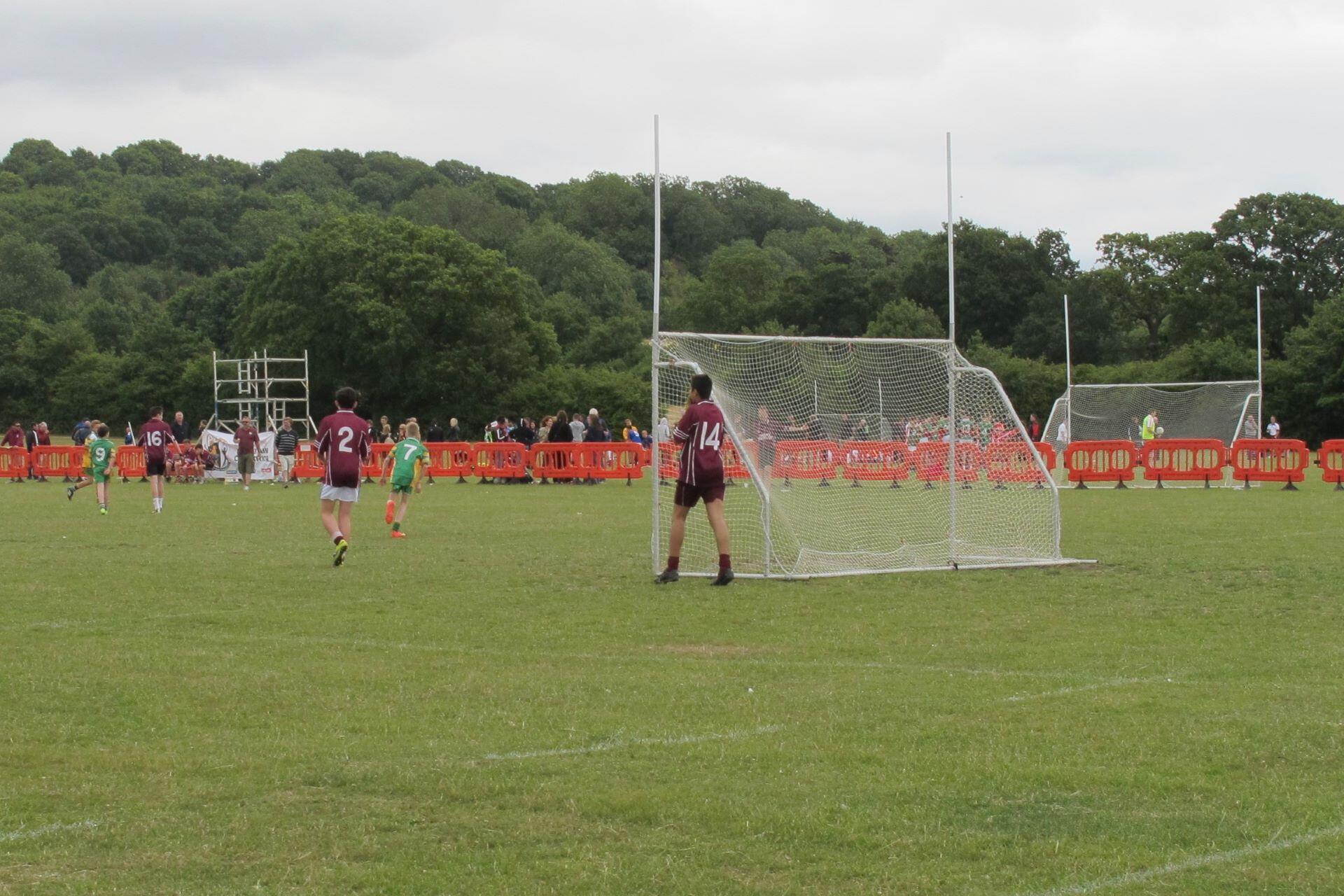
Gaelic football matches can vary in length. The actual length depends on the competition level and any extra time required. Normal playing time is divided into two halves.
Standard Match Lengths
minutes of normal playing time before added time is included.⁷
Extra Time and Replays
A standard Gaelic football match contains either 60 or 70 minutes of normal playing time, depending on the competition level.⁷ The complete event also includes half-time, added time and any delays caused by injuries, substitutions or disciplinary incidents. Knockout matches may last considerably longer when extra time or another tie-breaking procedure is required.⁷
Historical Context: Is Gaelic Football Older Than Soccer?
There are a few ways to compare the age of both sports. Consider the ancient games that eventually were codified into the sport. You could also consider when the sports were codified and officially formalised. Modern codified soccer is older, even though Gaelic football developed from much older Irish sporting traditions.⁴ Just like trying to compare the best footballers across eras, remember that there are limits to how useful the comparison actually are.
Origins of Gaelic Football
Origins of Soccer
Comparative Analysis
Gaelic Football
Gaelic football grew from much older Irish ball-game traditions that existed long before the GAA was founded. The modern sport was formally organised in 1884, when the Association established standard rules for Gaelic football.¹
Soccer
Soccer also developed from earlier forms of football, but its modern code was organised sooner. The Football Association was founded in 1863 and established rules that distinguished association football from other forms of football.²
Traditional Irish football games existed long before the establishment of the GAA, which is why Gaelic football is often described as an ancient sport.⁴ Modern association football was formally organised in England in 1863, while the first standard GAA football rules were adopted in 1884.² The Football Review Committee organised its proposals around seven headline enhancements, including the scoring arc, Solo and Go, revised kick-outs and positional requirements.⁵ The changes were subsequently approved for permanent use from 1 January 2026 following the GAA Special Congress.³
| Topic | Current rule | How it works |
|---|---|---|
| Team size | Each team has 15 players: one goalkeeper and 14 outfield players. | Players are divided into defensive, midfield and attacking positions. |
| Pitch dimensions | The pitch is 130–145 metres long and 80–90 metres wide. | A Gaelic football pitch is larger than a standard association football pitch. |
| Football | The ball weighs 480–500 grams and measures 68–70 centimetres in circumference. | It resembles a round football but is designed for kicking, catching and hand-passing. |
| Mouthguard | Every player must wear a mouthguard during matches and training sessions. | A player cannot participate without the required protective equipment. |
| Lifting the ball | An outfield player cannot pick the ball directly off the ground with their hands. | The ball must normally be lifted using the foot. |
| Four-step rule | A player may carry the ball for no more than four consecutive steps. | After four steps, the player must kick, hand-pass, bounce or solo the ball. |
| Bouncing and soloing | The ball may be bounced once after it has been caught and again after each solo. | Players use the solo, or toe-tap, to continue running with the ball. |
| Hand-pass | The ball must be struck with the fist or with a definite underhand open-hand action. | Throwing the ball to another player is not permitted. |
| One-point score | A ball played over the crossbar from inside the 40-metre arc or inside the 20-metre line earns one point. | Most close-range scores over the bar add one point to the team’s total. |
| Two-point score | A qualifying kick over the crossbar from on or outside the 40-metre arc earns two points. | The kick must travel over the bar without another teammate touching it; a score from a 45 remains worth one point. |
| Goal | A ball played between the posts and under the crossbar is worth three points. | Goals are shown separately from points on the scoreboard. |
| Match duration | Most matches have two 30-minute halves, while senior inter-county championship and National League matches have two 35-minute halves. | Added time may be played for stoppages and delays. |
| Physical contact | A legal shoulder-to-shoulder charge is permitted in defined circumstances. | Players may challenge for possession, but dangerous or unfair contact is penalised. |
| Positional rule | Each team must generally keep at least four players in its own half and three outfield players in the opposition half. | Teams cannot move every player into the same half of the pitch. |
If you'd like to learn more about GAA, look to a private tutor or coach on the Superprof website. You could even learn more about the Irish language or culture with one. With tutors all over the country and around the world ready to help, you're bound to find the right one for you.
Not sure which one to pick? Don't worry! Most tutors offer the first session for free, allowing you to try potential tutors before picking the one that's the best match for you, your budget, and your preferred learning style. Find your perfect tutor on Superprof today.
References
- Croke Park GAA Museum. The Gaelic Athletic Association through History and Geography. Croke Park, https://crokepark.ie/BlankSite/media/Images/secondary-schools-resource-pack.pdf. Accessed 13 Jul. 2026.
- The Football Association. “A History of the FA.” The FA, https://www.thefa.com/about-football-association/who-we-are/history. Accessed 13 Jul. 2026.
- Gaelic Athletic Association. “All 62 Motions Passed at GAA Special Congress.” GAA, 4 Oct. 2025, https://www.gaa.ie/article/all-62-motions-passed-at-gaa-special-congress. Accessed 13 Jul. 2026.
- Gaelic Athletic Association. “Football: History and Evolution.” GAA, https://www.gaa.ie/my-gaa/getting-involved/football-history-and-evolution. Accessed 13 Jul. 2026.
- Gaelic Athletic Association. “Football Review Committee Rule Enhancements Explainer.” GAA, 23 Jan. 2025, https://www.gaa.ie/article/football-review-committee-rule-enhancements-explainer. Accessed 13 Jul. 2026.
- Gaelic Athletic Association. “The Foundation of the GAA.” GAA, https://www.gaa.ie/the-gaa/history. Accessed 13 Jul. 2026.
- Gaelic Athletic Association. Official Guide: Part 2. Effective 27 Mar. 2026, https://www.gaa.ie/api/images/image/upload/t_q-best/prd/xi4oyuttzqpaqr2vfhbn.pdf. Accessed 13 Jul. 2026.
- Gaelic Athletic Association. “Our Games.” GAA, https://www.gaa.ie/the-gaa/games/our-games. Accessed 13 Jul. 2026.
- International Football Association Board. “Law 1: The Field of Play.” IFAB, https://www.theifab.com/laws/latest/the-field-of-play/. Accessed 13 Jul. 2026.
- World Rugby. “Law 1: The Ground.” World Rugby Passport, https://passport.world.rugby/laws-of-the-game/laws-by-number/1-the-ground/. Accessed 13 Jul. 2026.
Summarise with AI:
Did you like this article? Leave a rating!

 Loading...