
Ireland has produced inventors who've shaped science, technology, and everyday life. From industry to snacks, you might be surprised at the innovation on display. Here are just a handful of our favourite Irish inventions.
Key Takeaways
- Irish inventors have contributed innovations in science, engineering, agriculture, and everyday products.
- John Philip Holland helped develop the modern submarine, influencing naval technology worldwide.
- Nicholas Callan’s induction coil enabled early high-voltage electrical experiments.
- Francis Beaufort created a wind scale still used in weather forecasting and navigation.
- Harry Ferguson’s three-point linkage system remains a standard feature of tractor design.
- Irish inventions also include everyday innovations such as flavoured crisps and shorthand writing systems.


The Submarine: John Philip Holland and a New Era of Naval Design
metres in 2019. This wasn't one of Holland's, by the way.
John Philip Holland is known as the pioneer of the modern submarine. He's known for designing a series of underwater vessels that could move beneath the sea. He turned the submarine from a risky experiment into a practical naval craft.⁶
Holland's designs combined technologies that previous submarines lacked. He included internal combustion engines for surface travel and electric motors for underwater travel. Holland also developed steering systems and depth-keeping systems. By the late 19th century, his designs influenced several navies around the world.⁶
The Induction Coil: Nicholas Callan’s Breakthrough in Electricity
Nicholas Callan was an Irish priest and scientist from County Louth. He invented the induction coil while working as a professor at Maynooth College. Callan studied electricity and sought ways to generate stronger electrical currents for experiments and demonstrations.⁹
Nicholas Callan, a professor at Maynooth College in Ireland, developed the induction coil in the 1830s while experimenting with electricity. His device could generate very high voltages from relatively low power sources, making it useful for early electrical experiments. Induction coils later became important in technologies such as spark ignition systems and early radio transmitters.
The device he invented could convert low-voltage electrical current into high-voltage pulses. The induction coil interrupts the current in a primary coil, inducing a much higher voltage in a secondary coil. Scientists could generate powerful electric sparks, using them for early electrical research and later technologies.²
The Beaufort Scale: Francis Beaufort’s System for Measuring Wind
That which no canvas could withstand.
Francis Beaufort, describing Force 12.
Francis Beaufort was an Irish naval officer born in County Meath in 1774. He developed the Beaufort scale while serving in the British Royal Navy. He spent years observing weather conditions at sea, and created accurate descriptions of wind strength essential for navigation and safety.¹
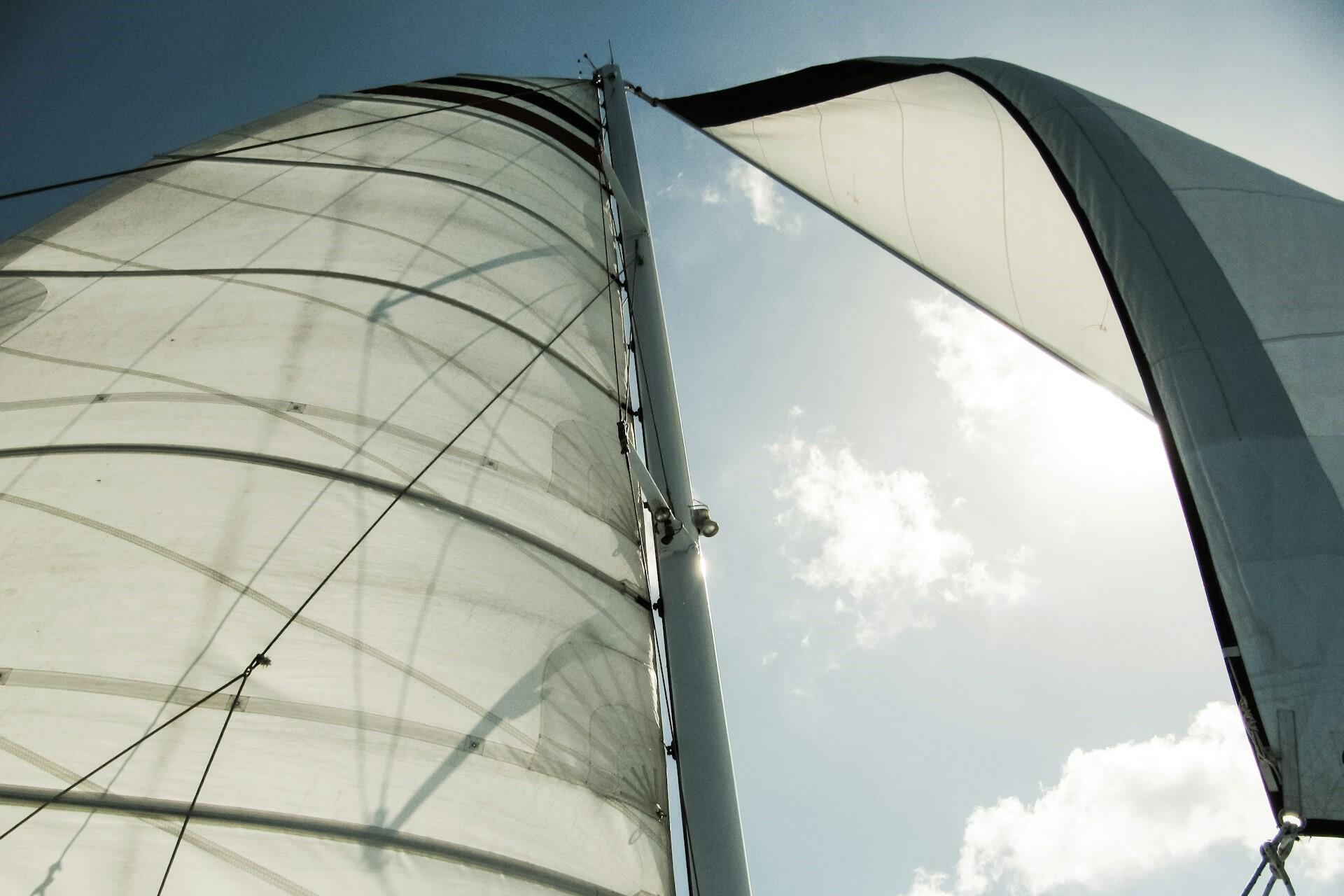
His numerical scale linked wind force to observable effects on sails and the sea. Rather than measuring wind speed directly, sailors could estimate the strength of wind by looking at waves, spray, and how a ship's sails behave. This is a practical system that enables consistent weather recording. It was later adopted widely in maritime navigation and meteorology.¹
The Seismometer: Robert Mallet and the Foundations of Seismology
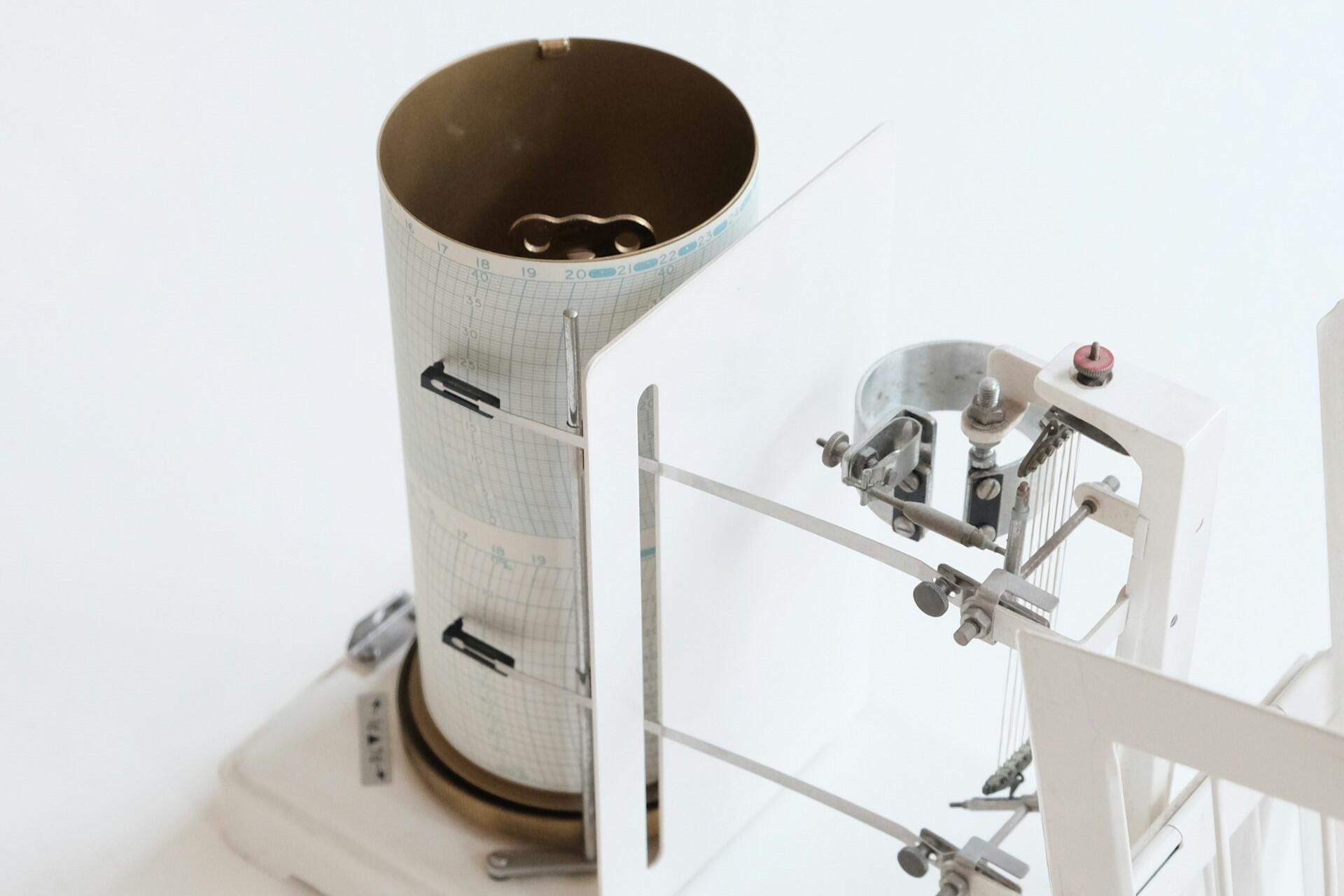
Robert Mallet was one of the first scientists to systematically study earthquakes. He was interested in how vibrations moved through the earth, but he wanted to measure and understand them using scientific approaches. Ultimately, he designed instruments to detect and record ground motion. He helped lay the foundations for the modern seismometer.
Colour Photography: John Joly’s Single-Plate Process
John Joly was an Irish physicist born in County Offaly in 1857. He developed an early method for producing colour photographs while he was working at Trinity College in the Irish capital city. He wanted to reproduce natural colour on photographic plates.⁵
His technique used a fine screen of coloured lines over a photographic plate. When light passed through the screen and exposed the plate, the colours could be reconstructed later by viewing the plate through a similar process. It was known as the Joly process and became one of the first practical approaches to colour photography.⁵
The Ejector Seat: Sir James Martin’s Life-Saving Aviation Innovation
James Martin was an Irish engineer from County Down. He developed the ejector seat, improving pilot safety in military aircraft. Aircraft became more complex in the twentieth century, and escaping from a damaged plane grew increasingly difficult.
Martin worked with engineer Valentine Baker and designed a seat that could be propelled out of the aircraft by explosive charges. Once clear of the plane, a parachute would deploy. This transformation in aviation safety has since saved thousands of aircrew during emergencies.⁸
lives have been saved by ejector seats.
The Three-Point Linkage: Harry Ferguson’s Revolution in Farming
Harry Ferguson developed the three-point linkage. Ferguson wanted tractors to operate as integrated machines rather than simply pulling equipment behind them. By linking the implement and tractor frame into a single unit, Ferugson's design improved control. The idea spread rapidly as tractor manufacturers adopted the system in later decades.³
Harry Ferguson's three-point linkage system changed how tractors worked, allowing farming equipment to be attached in stable, easy-to-control ways. Ferguson's linkage connected tools directly to the tractor's hydraulic system, improving balance and safety while making machinery easier to operate. Today, versions of this system are still used on tractors worldwide.
Perforated Postage Stamps: Henry Archer’s Postal Innovation
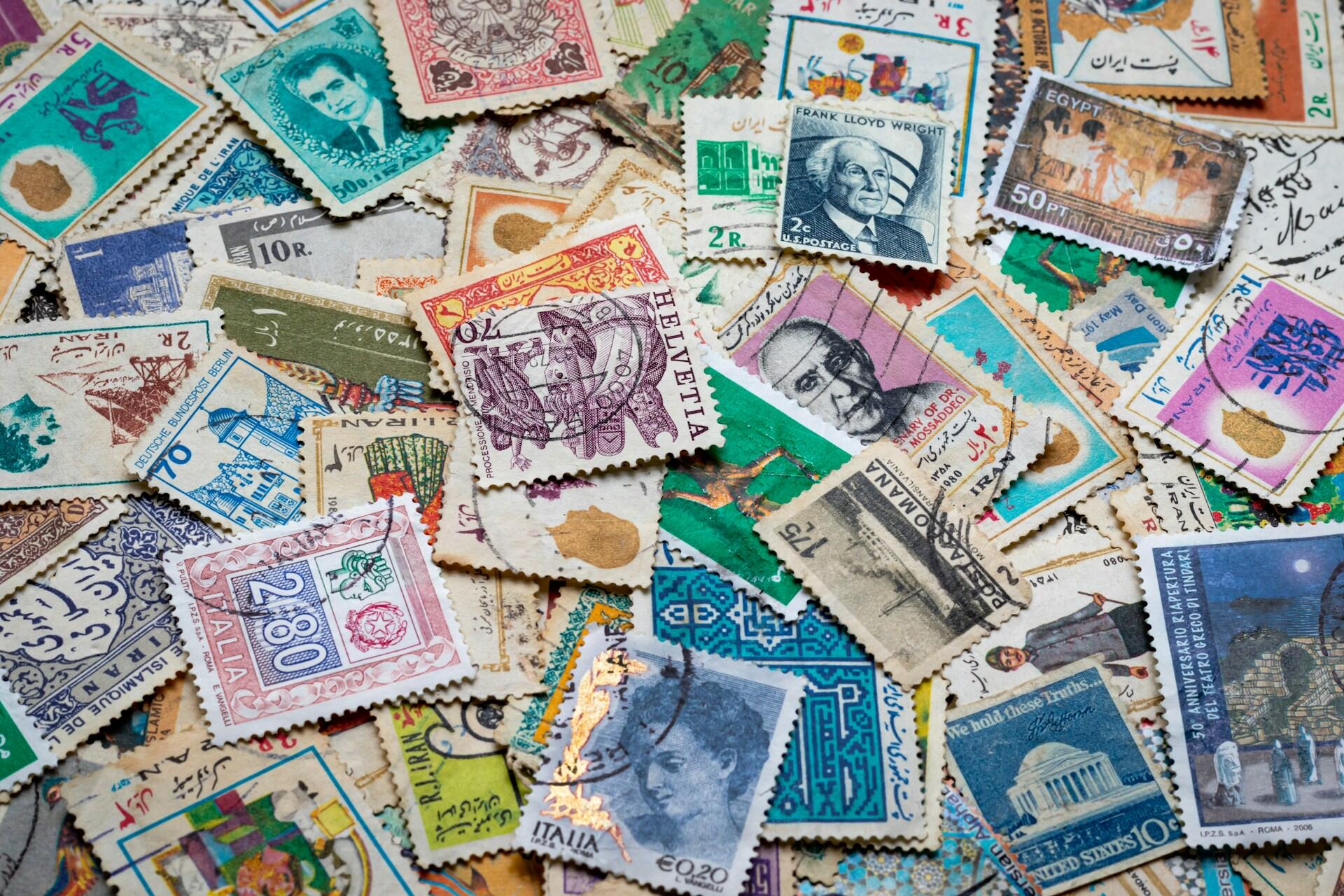
Henry Archer invented a practical method for perforating postage stamps in the mid-nineteenth century. At the time, stamps were printed in sheets, but they had to be cut individually with scissors. This slowed postal work, making stamps inconvenient to handle.¹⁰ Archer's machine punched small rows of holes between the stamps. These perforations allowed stamps to be separated quickly by tearing along the lines. This became a standard feature of stamp production worldwide.¹⁰
Flavoured Crisps: Joe “Spud” Murphy and the Tayto Breakthrough
Imagine a world where every crisp is plain? Joe “Spud” Murphy didn't want to live in that world. The founder of Tayto (heard of them?) was interested in improving the flavour of crisps, which were commonly sold plain at the time.⁴ Potatoes mightn't have been around in Ireland at the time of the Celts, but since their introduction, they've been fairly important in Ireland for a variety of reasons.
One of Ireland's most surprising inventions came from the snack aisle. In the 1950s, Joe "Spud" Murphy, the founder of Tayto in Dublin, experimented with adding seasoning directly to potato crisps. Until then, crisps were usually sold plain. Murphy developed a method to flavour them during production, introducing famous flavours, including my personal favourite, cheese and onion. The idea quickly caught on and helped shape the flavoured crisp industry that exists worldwide today.
His method of seasoning crisps ensured the flavour was evenly distributed across the batch. This led to varieties like cheese and onion. The idea was so popular that flavoured crisps became a standard product in the global snack market.⁴
Gregg Shorthand: John Robert Gregg’s Writing System for Speed and Clarity
John Robert Gregg was an Irish educator from County Down. He created a shorthand writing system to record speech quickly and efficiently. He'd studied earlier methods, but he found them too complex for practical use.⁷ His system used smooth flowing curves rather than sharp angles. This enabled rapid, legible notetaking. Gregg shorthand was widely taught in schools and business colleges. It was used by secretaries, journalists, and office workers to take fast and accurate notes.⁷
| Invention | Inventor | Irish Connection | Approximate Date | Notes |
|---|---|---|---|---|
| Submarine | John Philip Holland | County Clare | Late 19th century | Designed practical submarines capable of controlled underwater travel |
| Induction Coil | Nicholas Callan | County Louth | 1830s | Early high-voltage electrical device used in scientific experiments |
| Beaufort Scale | Francis Beaufort | County Meath | 1805 | System used to classify wind strength using observable conditions |
| Seismometer | Robert Mallet | Dublin | Mid-19th century | Instruments and experiments that helped establish seismology |
| Colour Photography Process | John Joly | County Offaly | 1894 | Early method for producing colour photographs using a filtered screen |
| Ejector Seat | Sir James Martin | County Down | 1940s | Aircraft escape system that has saved thousands of pilots |
| Three-Point Linkage | Harry Ferguson | County Down | 1920s–1930s | Tractor attachment system improving control of farming equipment |
| Perforated Postage Stamps | Henry Archer | County Dublin | 1850s | Machine that punched holes between stamps to make separation easier |
| Flavoured Crisps | Joe 'Spud' Murphy | Dublin | 1950s | Introduced seasoning directly into crisps during production |
| Gregg Shorthand | John Robert Gregg | County Down | 1888 | Shorthand writing system used for rapid note-taking |
Of course, if you'd like to learn more about Ireland, Irish history, Irish culture, or the Irish language, you could always get in touch with a tutor on Superprof. There are tutors all over Ireland and around the world ready to help you. Just search for what you want to learn on our website today!
References
- “Beaufort Scale.” Met Office, https://weather.metoffice.gov.uk/guides/coast-and-sea/beaufort-scale. Accessed 10 Apr. 2026.
- “Callan’s Pioneering Contributions to Electrical Science and Technology, 1836.” Engineering and Technology History Wiki, https://ethw.org/Milestones%3ACallan%27s_Pioneering_Contributions_to_Electrical_Science_and_Technology%2C_1836. Accessed 10 Apr. 2026.
- “Harry Ferguson.” Ulster Transport Museum, https://www.ulstertransportmuseum.org/stories/harry-ferguson. Accessed 10 Apr. 2026.
- “History of Tayto.” Tayto Crisps, https://taytocrisps.ie/history/. Accessed 10 Apr. 2026.
- “John Joly.” School of Physics, Trinity College Dublin, https://www.tcd.ie/physics/300/history/exhibition-gallery/john-joly/. Accessed 10 Apr. 2026.
- “John Philip Holland.” Encyclopaedia Britannica, https://www.britannica.com/biography/John-Philip-Holland. Accessed 10 Apr. 2026.
- “John Robert Gregg.” Encyclopaedia Britannica, https://www.britannica.com/biography/John-Robert-Gregg. Accessed 10 Apr. 2026.
- “Martin-Baker: About Us.” Martin-Baker, https://martin-baker.com/about-us/. Accessed 10 Apr. 2026.
- “Reverend Nicholas Callan.” Maynooth University, https://www.maynoothuniversity.ie/electronic-engineering/callan. Accessed 10 Apr. 2026.
- “Stamp Perforations: A Short History.” Linn’s Stamp News, https://www.linns.com/apfelbaums-corner-blog/stamp-perforations-history. Accessed 10 Apr. 2026.
Summarise with AI:
Did you like this article? Leave a rating!

 Loading...